
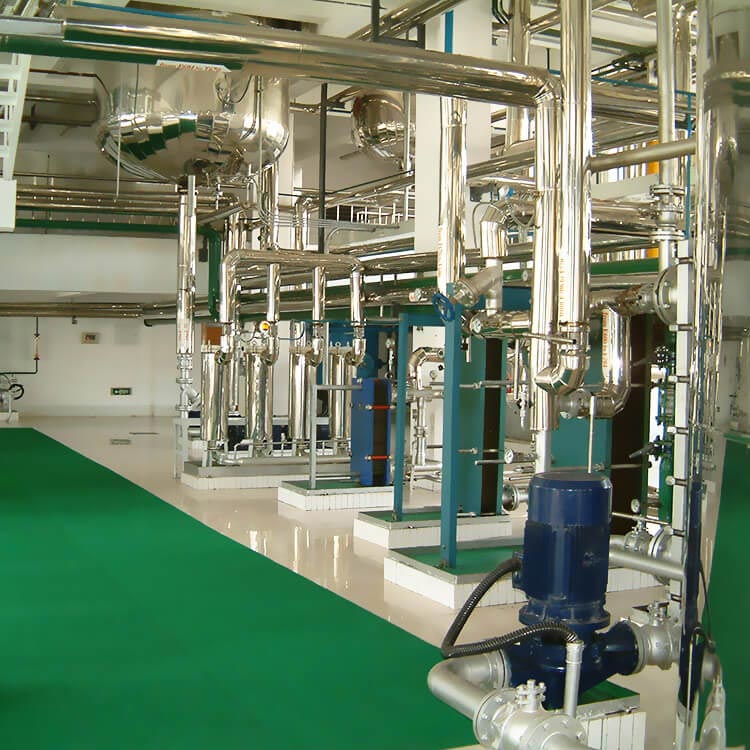
Advanced Dual-Method Degumming for Superior Phospholipid Removal
The Huatai Oil Refining Plant Degumming System is the essential first step in edible oil refining, designed to remove phospholipids (gums) from crude vegetable oils. Combining traditional hydration degumming with advanced enzymatic degumming using phospholipase enzymes, our system achieves phosphorus levels below 10 ppm — far surpassing water degumming alone (typically 100-200 ppm) and significantly reducing bleaching earth consumption in downstream processing. Available in capacities from 1 to 500 TPD, the degumming system handles soybean oil, rapeseed oil, sunflower oil, rice bran oil and corn oil. The dual-method approach provides flexibility to optimize enzyme dosage and processing conditions for each oil type, minimizing operating costs while maximizing oil yield and quality.Technical Specifications
| Parameter | Specification |
|---|---|
| Capacity | 1 – 500 TPD |
| Phosphorus Content After Degumming | < 10 ppm |
| Enzyme Dosage | 30 – 80 ppm |
| Reaction Temperature (Enzymatic) | 40 – 55°C |
| Motor Power | 3 – 15 kW |
| Hydration Water Addition | 2 – 5% of oil weight |
| Enzyme Reaction Time | 2 – 6 hours |
| pH Adjustment Range | 4.5 – 6.0 (citric acid buffer) |
| Material of Construction | Stainless steel (contact parts) |
| Operation Mode | Continuous |
Degumming Working Principle
A two-stage process combining hydration and enzymatic degumming removes both hydratable and non-hydratable phospholipids.
Crude Oil Heating & pH Adjustment
Crude oil is heated to the target temperature and conditioned with a citric acid solution to adjust pH to the optimal range for enzyme activity. The citric acid also chelates metal ions that can interfere with the degumming process, improving overall phospholipid removal efficiency.
Hydration Degumming
Warm water (2-5% of oil weight) is added to the oil with vigorous mixing. Hydratable phospholipids absorb water, swell and become insoluble in the oil, forming a heavy gum phase. This first stage removes the majority of hydratable phospholipids (phosphatidylcholine and phosphatidylinositol).
Enzymatic Degumming
Phospholipase enzyme (Lecitase Ultra or equivalent) is dosed at 30-80 ppm into the oil at 40-55°C. The enzyme specifically converts non-hydratable phospholipids (phosphatidic acid and phosphatidylethanolamine) into hydratable lysophospholipids and free fatty acids, which are easily removed by centrifugation.
Gum Separation by Centrifuge
The oil-gum mixture is fed to a high-speed disc centrifuge where the heavy gum phase is separated from the light oil phase. The gum (lecithin) can be collected as a valuable by-product for food and feed applications, or routed to the soapstock tank for acidulation.
Degummed Oil to Neutralization
The degummed oil, with phosphorus content below 10 ppm, is dried under vacuum and transferred to the neutralization (deacidification) stage. The ultra-low phosphorus level protects bleaching earth from premature deactivation and prevents fouling in the deodorizer.
Why Choose Huatai Degumming System
Dual-Method Flexibility
Our system combines hydration degumming and enzymatic degumming in a single integrated process line. Hydration removes the bulk of hydratable phospholipids cost-effectively, while the enzymatic stage targets non-hydratable phospholipids that water alone cannot remove — delivering the best of both methods in one system.
Phosphorus Below 10 ppm
Enzymatic degumming achieves phosphorus levels below 10 ppm, compared to 100-200 ppm with water degumming alone. This ultra-low phosphorus content protects downstream bleaching earth from deactivation, reduces earth consumption by 30-50%, and prevents fouling in the deodorizer — delivering measurable cost savings across the entire refining line.
Enzyme Cost Optimization
Precise enzyme dosing control (30-80 ppm) and optimized reaction conditions (temperature, pH, residence time) minimize enzyme consumption while achieving target phosphorus levels. Although enzyme costs add approximately $3-5/ton, the net savings from reduced bleaching earth consumption and increased oil yield deliver $8-15/ton in cost benefits.
Applicable Oil Types
Huatai degumming systems process all major vegetable oils requiring phospholipid removal before refining.
Soybean Oil
Soybean oil contains 1.5-3.0% phospholipids, making degumming critical. Enzymatic degumming is especially beneficial for soybean oil due to its high non-hydratable phospholipid content after water degumming.
Rapeseed Oil
Rapeseed oil contains 0.8-2.0% phospholipids with a significant proportion of non-hydratable gums. Enzymatic degumming is the preferred method for achieving low phosphorus levels in rapeseed oil refining.
Sunflower Oil
Sunflower oil has moderate phospholipid content (0.5-1.2%). Hydration degumming followed by enzymatic polishing produces excellent results, preparing the oil for efficient bleaching and dewaxing.
Rice Bran Oil
Rice bran oil contains 0.5-1.5% phospholipids along with high wax content. Enzymatic degumming is particularly valuable for rice bran oil as it maximizes oil yield before subsequent dewaxing.
Corn Oil
Corn oil contains 1.0-2.0% phospholipids. The dual-method degumming approach effectively handles the mix of hydratable and non-hydratable gums typical of corn oil processing.
Frequently Asked Questions
Why is degumming the first refining step?
Phospholipids (gums) cause emulsification, foaming and sedimentation in downstream processes. Removing them first protects bleaching earth from deactivation and prevents fouling in deodorization. If gums are not removed, they will chelate with bleaching earth, dramatically increasing consumption, and will decompose in the deodorizer at high temperatures, causing darkening and off-flavors in the finished oil.
What is enzymatic degumming?
Phospholipase enzymes convert non-hydratable phospholipids into hydratable forms and lysophospholipids, achieving phosphorus levels below 10 ppm — significantly lower than water degumming alone (100-200 ppm). The enzyme specifically cleaves the fatty acid from the phospholipid molecule, making the resulting lysophospholipid water-soluble and easily removed by centrifugation.
Is enzymatic degumming cost-effective?
Yes. Although enzyme costs add approximately $3-5/ton, enzymatic degumming reduces bleaching earth consumption by 30-50% and increases oil yield by 0.3-0.8%, delivering net savings of $8-15/ton. The reduction in bleaching earth also decreases solid waste disposal costs and environmental impact, making enzymatic degumming both economically and environmentally superior to water degumming alone.
Complete Your Refining Line
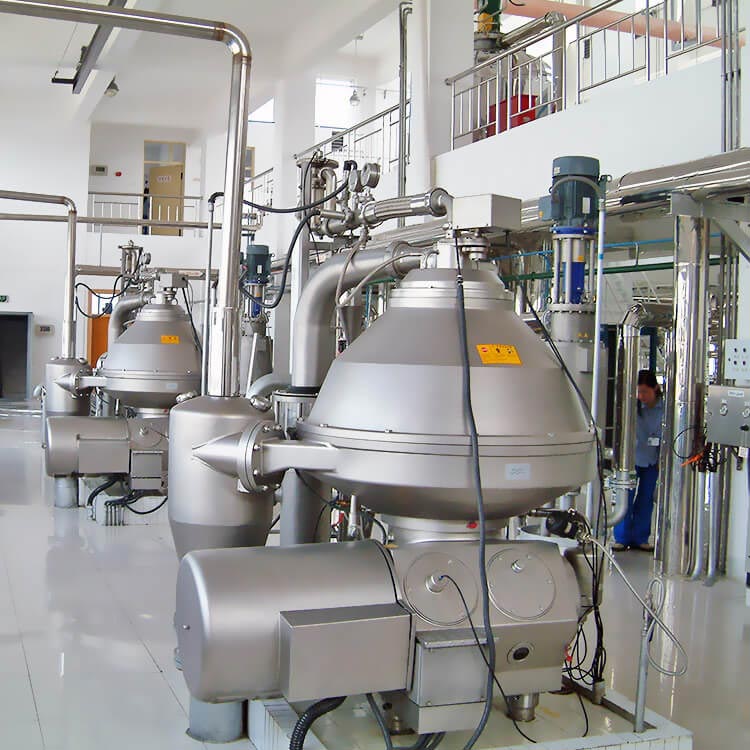
Oil Refining Deacidification S
Oil Refining Plant Degumming S
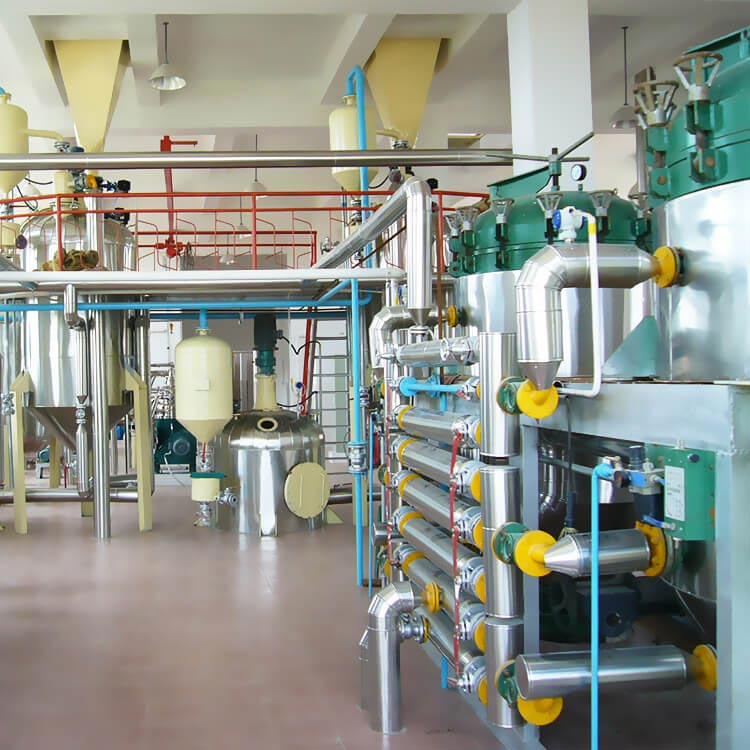
Edible Oil Dewaxing Machine
Need a Degumming System That Achieves Below 10 ppm Phosphorus?
Tell us your oil type, daily capacity and target phosphorus level — our engineers will configure the optimal degumming system for your refinery.
Send Us a Message
Fill in your project details below — our engineering team typically responds within 48 hours with a customized proposal and preliminary process flow diagram.