
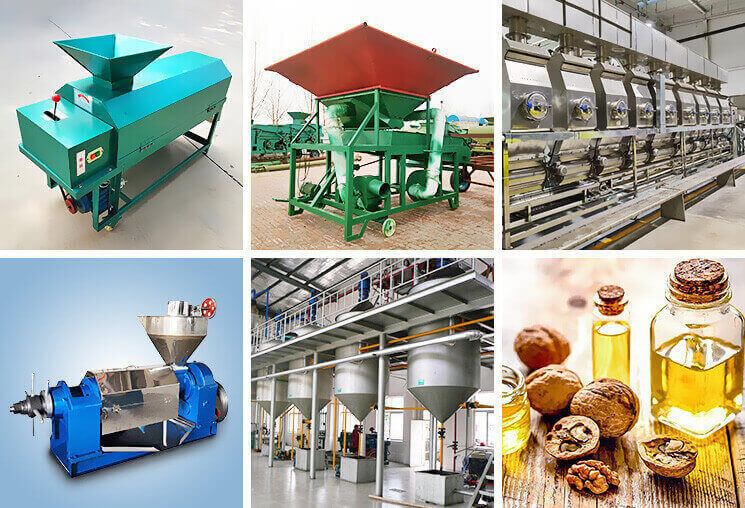
A specialty line is not a scaled-down commodity plant. Volume per hour stops being the measure that matters; character takes its place: aroma, colour, nutrients surviving handling, and buyers who chose you for those reasons rather than the cheapest litre on the shelf.
Three materials dominate this corner: walnut, linseed and mustard. Each rewards a different discipline and punishes the standard recipe its own way.
Why specialty oils follow different rules
Commodity works chase throughput. Owners argue over steam consumption, solvent losses, bleaching earth. Specialty sheds argue over temperature ceilings, lot identity, how much original character reaches the bottle.
Heat is the clearest divider. Cooking flakes hard before pressing releases more oil from soybean or rapeseed; nobody objects. Treat walnut the same way; the delicate note justifying the purchase fades. Here warmth stops being a yield lever, becomes a ceiling you stay under.
Batch size shifts the logic too. Producers run small lots for short customer lists and spend real hours stripping and cleaning between campaigns. Flexibility outranks peak capacity; a machine unbolting quickly beats one squeezing out another litre an hour.
Supply differs as well. Walnut kernels arrive from a shelling operation on its own calendar, linseed follows a harvest and an industrial contract, mustard follows a regional spice trade. None flows every week as palm fruit does, so storage and staleness become design questions, not afterthoughts.
Walnut: kernel handling and cold pressing
Walnut usually arrives shelled; the kernel is fragile, fatty, costly to waste. Bruised material oxidises fast, so conveying deserves attention: gentle elevators, low drop heights, no aggressive screw turning kernels to paste before the press.
Moisture governs how the machine behaves. Too dry and the cake crumbles while the liquid runs cloudy; too wet and the barrel slips. A conditioner letting you trim moisture ahead of pressing earns more here than an extra stage downstream.
Cold pressing is buyers' phrase; they mean a temperature ceiling, not an absence of warmth. Friction inside the press barrel generates heat whatever the label claims, so the practical question is where you cap and measure it. Water-cooled barrels and a restrained screw speed help.
Filtration follows. Walnut oil carries fine solids settling slowly, and bottle clarity sells. A filter press sized for small lots handles them cold.
Our walnut oil production line page covers kernel intake to filling at these scales.
Linseed: low-temperature handling and end uses
Flax seed sits at an awkward intersection. One crop feeds a food market prizing its fatty acid profile, an industrial market buying drying oil for paint, linoleum and timber treatment. Which customer you serve dictates the entire line.
Food-grade work keeps temperatures low and cleanliness high. This oil oxidises readily, turns rancid once exposed to air, light and warmth, so nitrogen blanketing on tanks, opaque packaging, short residence times at temperature are measures that count.
Industrial buyers read a different specification sheet: drying behaviour, colour, consistency lot to lot. The press may run warmer; the filtration standard is looser.
Cleaning is where flax demands particular care. The seed is small, slippery, coated in clumping mucilage; decks tuned for larger oilseeds underperform. Thin flaking helps release the oil; cooking needs restraint rather than enthusiasm.
Our linseed oil production line notes set out choices for both markets.
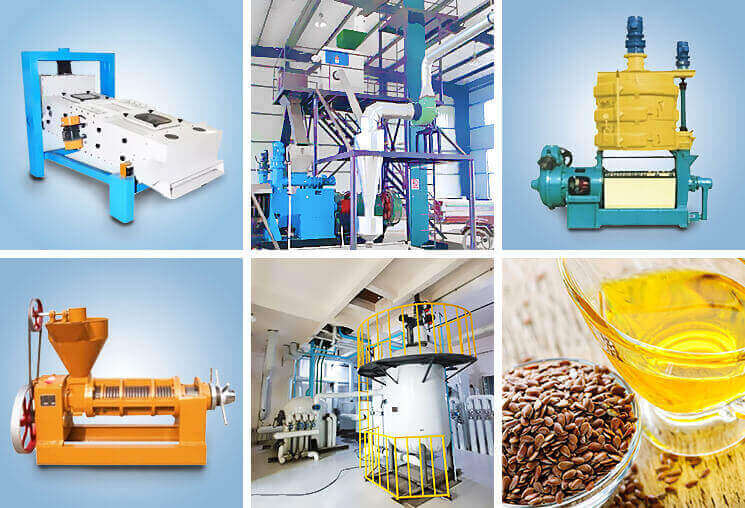
Mustard: flavour oil and when edible oil refining is the wrong move
Mustard edible oil sells on pungency. The compounds responsible are volatile; an edible oil refining train running degumming, neutralising, bleaching and deodorising strips what the customer pays for.
The usual advice inverts. For regional, flavour-led markets, edible oil refining is the wrong move and the line ends at filtration. Where the target is a blended product or an export destination expecting milder taste, partial treatment may be specified; a producer should discover it before ordering steel, not after commissioning.
Pressing whole seed or pressing cake gives different flavour profiles, and the meal carries its own constraints, since glucosinolates limit how much enters feed rations. Planning a mustard line therefore means planning the cake outlet with as much care as the bottle.
Regulation adds a wrinkle: food use of mustard oil is treated differently between markets, some destinations restricting use to labelled applications. Confirm those rules before the foundation is poured.
Our mustard oil production line page lists what a flavour-led line contains.

Sharing equipment across small lines
Few specialty producers justify three dedicated lines. They buy one, change it over, and changeover discipline decides whether a second oil tastes like the first.
What shares well: the press with interchangeable cages and screens, the filtration skid, the filling and capping bench, the weighbridge, and the lab bench with glassware for acidity and peroxide checks.
What shares badly: cleaning decks sized for one bulk density, silos holding residues of strongly flavoured material, any vessel whose previous contents taint the next lot. Mustard after walnut is a mistake nobody repeats.
A workable arrangement keeps one expeller and one filter, adds a cleaning module sized for the smallest seed, schedules pungent materials at the tail of a campaign, and accepts a cleaning shift between campaigns as normal cost.
Planning a walnut, linseed or mustard line and want a second read on the configuration? Send the material, the market you intend to sell into, your lot size. We will mark up what we would alter and why. +86 18337263319. No charge for the review. Chat with us WhatsApp →
FAQ
Can one press handle walnut kernels, linseed and mustard seed?
Yes, provided you buy a second cage and screen set. The press is rarely the constraint; the cleaning deck and flavour carryover are. Order spare screens dedicated to the smallest seed, because a deck set for walnut kernels will let mustard pass straight through.
Does specialty edible oil need an edible oil refining stage?
That is specified by your buyer, not by the material. Deodorising removes aroma compounds that make these oils worth selling, so a flavour-led line usually ends at filtration. If a contract demands treatment, toll it out or keep a separate small train so your press never sits idle.
What throughput makes sense for a specialty line?
These materials live at the small end: walnut runs roughly 5 to 50 tonnes daily, linseed 5 to 100, mustard 10 to 100. Choose a band that finishes one lot inside a single shift, since material held warm between shifts is material quietly losing quality.
How do I stop a delicate oil going rancid in storage?
Blanket the tank with nitrogen or fit a floating cover, fill opaque drums or bottles, and keep pallets away from the boiler house. Avoid copper and brass fittings, which accelerate oxidation, and log peroxide value weekly so you rotate stock before it turns.
Which of the three is the least risky first project?
Mustard, if your district already buys it: no solvent bay, the shortest equipment list, a cake with a regional outlet. Linseed comes next, provided you settle whether the contract is food or industrial before ordering. Walnut asks for the gentlest handling and the tightest storage discipline. Chat with us on WhatsApp, or call +86 18337263319.