
Ultra-Low Temperature Linseed/Flaxseed Oil Processing
Linseed (flaxseed) oil is the richest plant source of alpha-linolenic acid (ALA), an essential omega-3 fatty acid comprising 50-60% of its fatty acid profile. However, ALA is extremely sensitive to heat, light and oxygen — requiring specialized low-temperature processing to preserve its nutritional value. Huatai's linseed oil line uses ultra-low temperature pressing (≤40°C for food grade) with nitrogen-protected processing throughout. The high viscosity of linseed oil (40-50 cP at 20°C) is managed with specialized positive-displacement pumps and heated pipe tracing. Capacities from 5 to 100 TPD.
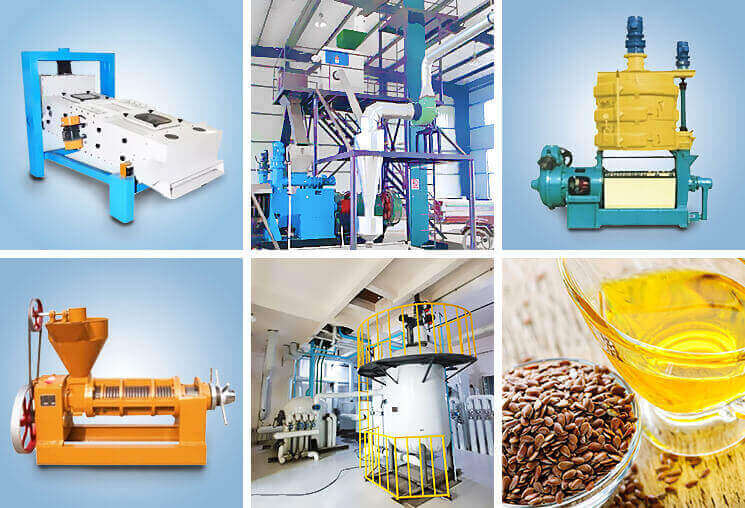
Linseed Oil Production Steps
From raw flaxseed to bottled, nitrogen-flushed linseed oil.
The line runs through 8 stages. The strip gives the sequence at a glance; the notes below cover temperatures, pressures and yields for each stage.
Cleaning & Grading
Vibrating screens, aspirators and magnetic separators remove stems, dust, stones and metal fragments. Flaxseed is small and dense, so screen apertures and air velocity are sized specifically for it. Clean seed protects the press barrel and keeps foreign flavours out of the finished oil.
Cold Pressing
A hydraulic press or low-RPM screw press extracts oil with barrel temperature held at or below 40°C. Single-pass recovery takes 60-70% of the available oil, leaving 8-12% residual oil in the cake. Press speed is deliberately slow. Friction heat is the enemy of every quality target on this line.
Sedimentation & Filtration
Crude oil settles in jacketed tanks to drop coarse sediment, then passes a stainless steel leaf filter under a nitrogen blanket. No bleaching earth, no heat, no caustic. The oil keeps its natural amber colour and the nutty taste buyers expect from genuinely cold-pressed linseed oil.
Nitrogen-Protected Storage
Filtered oil moves to stainless tanks held at 15-25°C with nitrogen in the headspace. Oxygen exposure is the single biggest driver of rancidity in linseed oil. Blanketing holds peroxide value below 2 meq/kg from tank to tank through the whole storage period.
Low-Temperature Conditioning
Seed is conditioned at 30-40°C — far below the 80-100°C used for commodity oilseeds. Gentle warming softens the seed coat enough to rupture it under pressure without cooking the oil. Push past 50°C and alpha-linolenic acid starts to oxidise before it ever reaches the bottle.
Filling & Packaging
Bottles are nitrogen-flushed before filling and capped with minimal headspace. Dark glass or UV-blocking PET adds another layer of protection on the retail shelf. Industrial grades are drummed or shipped in flexitanks, also under nitrogen.
Plant Capacity & Output
Indicative design windows. Final figures are fixed against your available feedstock and site conditions.
| Plant Capacity | 5-200 TPD flaxseed input, engineered to your available feedstock and floor area |
|---|---|
| Oil Yield (cold press) | 30-35% of seed weight in a single pass |
| Residual Oil in Cake | 8-12%, cake sold as high-value ruminant feed |
| Pressing Temperature | ≤40°C food grade; 60-80°C optional for industrial grade |
| ALA (Omega-3) Retention | ≥50% in finished oil, verified by third-party lab report |
| Peroxide Value at Packing | <2 meq/kg |
| Shelf Life | 12 months refrigerated; 6 months ambient in UV-blocking packaging |
Key Equipment Systems
Each system is designed and manufactured in-house under ISO 9001 quality management.
| Seed Cleaner | Vibrating screen + gravity separator + magnetic separator |
|---|---|
| Crusher | Low-speed roller crusher with adjustable gap for flaxseed coat rupture |
| Low-Temp Press | Hydraulic press with water-cooled barrel, ≤40°C operation for food-grade oil |
| Leaf Filter | Stainless steel filter with nitrogen-purged housing |
| Nitrogen Blanketing System | Storage tanks with automatic nitrogen pressure control and inline bottle purging |
Applications & Revenue Streams
How processors turn linseed oil into shelf products across food, cosmetic and industrial markets.
Food-Grade Bottling
Filtered, unrefined oil bottled for the health-food and supplement market. ALA content above 50% is the label claim buyers actually pay for, and solvent-free processing is what lets you make that claim honestly.
Industrial Drying Oil
Linseed oil is a drying oil. Its iodine value of 170-200 g I₂/100 g gives fast oxidative cross-linking on contact with air, which makes it a base stock for paints, varnishes, printing inks, linoleum and wood finishes.
Linseed Cake & Meal
Cake carries 8-12% residual oil and 30-34% protein. Dairy producers value it for lifting milk-fat content, and it sells well as an organic fertiliser. On a 50 TPD line the cake stream offsets a real share of operating cost.
Fibre Recovery (Optional)
If you process whole flax straw rather than seed alone, we engineer the dehulling stage to keep the fibre fraction intact so it can be sold on to textile or composite-board makers instead of being burnt.
Technical Highlights
Engineering innovations for superior linseed oil processing with Omega-3 preservation.
ALA Omega-3 Retention ≥50%
Ultra-low temperature pressing (≤40°C) and complete nitrogen protection preserve the highly unstable alpha-linolenic acid. This is the key selling point for premium food-grade linseed oil.
Anti-Oxidation Process Design
Every stage after pressing is nitrogen-blanketed — filtration, transfer, storage and filling. Peroxide value maintained <2 meq/kg at packaging and throughout 12-month refrigerated shelf life.
High-Viscosity Oil Handling
Specialized positive-displacement pumps and heated pipe tracing (25-30°C) manage linseed oil's 40-50 cP viscosity — preventing pump cavitation and flow issues common with conventional oil transfer systems.
Why Buyers Choose Huatai
Since 1988 we have designed, built and commissioned complete oil mill and refining plants worldwide — one partner from layout to handover.
ISO 9001 certified manufacturing · EPC turnkey delivery · 48-hour proposal turnaround
Frequently Asked Questions
Straight answers to the questions buyers ask us before placing an order.
What's the difference between cold-pressed and solvent-extracted linseed oil?
Cold-pressed (≤45°C) preserves the natural omega-3 (ALA) and flavor. Solvent extraction yields 35-40% more oil but loses the cold-pressed premium. Most food-grade linseed oil is cold-pressed; industrial linseed oil (paints, coatings) is solvent-extracted.
What is the oil content of linseed?
35-45% depending on variety. Canadian brown flax is typically 38-42%; Indian and European varieties range 33-40%.
Can the same line process other oilseeds?
Yes, with adjustments to the cleaning and flaking sections. Linseed is small (3-4mm), so the screens and roll gaps need to be set tighter than for soybean. We can configure a multi-seed line for linseed + flax + hemp.
How do you prevent the oil from going rancid quickly?
Three strategies: cold pressing at ≤45°C, nitrogen flushing during bottling, and dark/opaque containers. Shelf life of properly handled cold-pressed linseed oil is 12-18 months.
What's the meal value after pressing?
Cold-pressed linseed meal retains 25-30% residual oil, rich in ALA. It is sold as a high-value omega-3 feed supplement for horses, poultry, and pet food.
Do you deliver the bottling section or only the press line?
We deliver the press line, filtration, and storage tanks. Bottling and packaging are usually handled by a separate specialized supplier.
What capacity should I choose for a Linseed Oil Production Line?
Capacity depends on how much raw material you can secure year-round, not on how much you would like to sell. Tell us your daily or monthly feedstock availability, the local season pattern and your target market, and we size the line so it runs near full load most of the year instead of sitting idle between harvests.
Can the line be expanded later?
Yes. We build these plants in modules, so you can start with pressing and add solvent extraction, refining or fractionation once volume justifies it. We reserve the floor space, utility capacity and pipe racks for the later stages during the first installation, which costs very little at the time and saves a rebuild later.
Do you handle installation and training for a Linseed Oil Production Line?
We deliver on an EPC turnkey basis. Our engineers supervise foundation setting, erection and commissioning on site, run the line through performance testing, and train your operators and maintenance crew before handover. You receive a running plant, not a crate of parts.
What about spare parts and after-sales support?
Wear parts for the presses, filters and pumps are stocked as standard and ship with the plant as a recommended spares package. After commissioning our team stays reachable for remote troubleshooting, and we can place a service engineer on site for major overhauls.
How long does delivery take?
Lead time depends on capacity, configuration and how much custom engineering your site needs. Rather than quote a number that will not hold, we confirm a firm design, manufacturing and shipping schedule alongside the proposal, broken down by stage so you can plan civil works around it.
What do you need from me to prepare a quotation?
Three things are enough to start: your raw material and its typical oil content, your target capacity in tonnes per day, and the destination port or country. Send those over and we come back with a process flow, equipment list and budget estimate. Send your requirements on WhatsApp and we will take it from there.
Get Your Customized Linseed Oil Plant Solution
Tell us your target capacity and product requirements. Our engineers will prepare a tailored proposal within 48 hours.
Send Us a Message
Fill in your project details below — our engineering team typically responds within 48 hours with a customized proposal and preliminary process flow diagram.