
Premium Cold-Pressed Walnut Oil — Omega-3 Preservation
Walnut oil is a premium edible oil valued for its rich, nutty flavor and high omega-3 fatty acid content (alpha-linolenic acid, typically ≥55%). Huatai's walnut oil production line employs low-temperature cold pressing (≤60°C) to preserve these delicate nutritional compounds, followed by nitrogen-protected filtration and storage to prevent oxidation.
The line is designed for capacities from 5 to 50 TPD and delivers food-grade walnut oil suitable for gourmet culinary use, nutritional supplements and cosmetic applications. High-protein walnut meal is recovered as a valuable by-product.
| Raw Material | Walnut kernels (shelled) |
|---|---|
| Process Type | Low-temperature cold press (≤60°C) |
| Capacity Range | 5 – 50 TPD |
| Final Product | Food-grade cold-pressed walnut oil + protein meal |
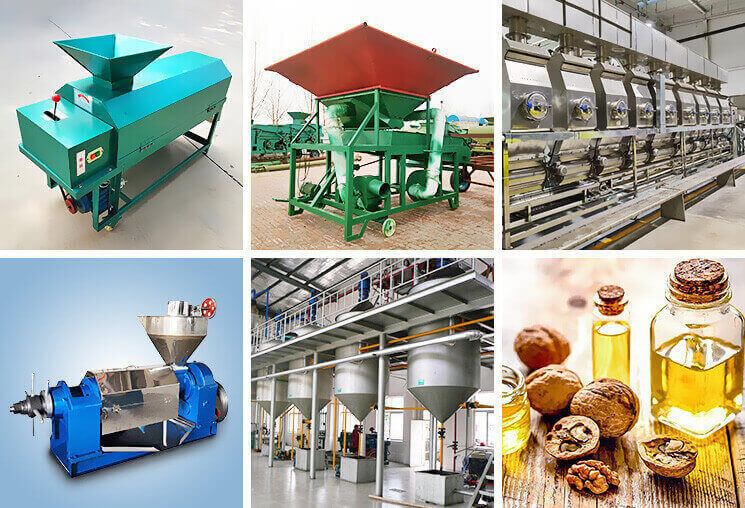
Walnut Oil Production Steps
From walnut kernels to cold-pressed, Omega-3-rich walnut oil.
The line runs through 8 stages. The strip gives the sequence at a glance; the notes below cover temperatures, pressures and yields for each stage.
Shelling & Kernel Selection
Walnuts are cracked and shells separated from kernels. Optical sorting removes shell fragments and discolored kernels for premium oil quality.
Low-Temperature Cold Pressing
Hydraulic or screw press operating at ≤60°C. Low temperature preserves omega-3 fatty acids (≥55% ALA retention) and prevents the development of bitter off-flavors.
Sedimentation & Filtration
Natural sedimentation removes coarse particles, followed by fine plate filtration under nitrogen blanket to achieve crystal-clear oil without oxidative damage.
Nitrogen-Protected Storage & Packaging
Finished oil is stored in stainless steel tanks under nitrogen headspace. Automatic filling into nitrogen-flushed bottles extends shelf life to 18+ months.
Winterization (Optional)
Controlled cooling to 0-5°C crystallizes high-melting-point waxes and saturated fats, which are then filtered out — ensuring oil remains clear at refrigeration temperatures.
Plant Capacity & Output
Indicative design windows. Final figures are fixed against your available kernel supply and seasonality.
| Plant Capacity | 1-50 TPD walnut kernel input; 1-5 TPD lines suit regional brands and estate producers |
|---|---|
| Kernel Oil Content | 60-70% depending on variety and origin |
| Cold-Press Oil Yield | 40-50% of kernel weight — no solvent, no refining losses |
| Pressing Temperature | ≤60°C throughout the press barrel |
| ALA (Omega-3) Retention | ≥55% in finished oil |
| Peroxide Value | <2 meq/kg held across the declared shelf life |
| Shelf Life | 18+ months in nitrogen-flushed, UV-blocking packaging |
Key Equipment Systems
Each system is designed and manufactured in-house under ISO 9001 quality management.
| Walnut Sheller | Mechanical cracking with shell-kernel separation — adjustable for different walnut varieties |
|---|---|
| Hydraulic Cold Press | Low-RPM hydraulic pressing at ≤60°C with automatic cake discharge |
| Plate Filter | Stainless steel filter press with nitrogen-purged housing for oxidation-free filtration |
| Winterization Tank | Jacketed cooling tank with slow agitation, programmable temperature ramp-down to 0°C |
| Nitrogen Filling System | Inline nitrogen injection for bottles and headspace purging of storage tanks |
Applications & Revenue Streams
How processors turn walnut oil into premium retail, cosmetic and nutraceutical markets.
Premium Culinary Oil
Cold-pressed walnut oil sells at a multiple of commodity cooking oil. The flavour profile only survives if pressing stays cold and oxygen stays out, which is exactly what this line is built to guarantee.
Cosmetic & Carrier Oil
Walnut oil is a well-established base for skincare and massage formulations. We can hold back a cosmetic-grade stream with tighter filtration and a separate filling line if that market is your target.
Walnut Meal & Protein
Press cake runs 40-50% protein with a favourable amino acid profile. It mills into protein powder, bakery ingredient or fortified flour rather than going to animal feed at a fraction of the value.
Shell By-Products
Crushed walnut shell is sold as an industrial abrasive, filtration media and activated-carbon feedstock. On a 20 TPD line it is a genuine revenue item, not a disposal cost.
Technical Highlights
Engineering innovations for superior walnut oil processing with Omega-3 preservation.
Omega-3 Preservation (≥55%)
Low-temperature processing preserves heat-sensitive alpha-linolenic acid (ALA). Independent lab testing confirms ALA retention above 55% in finished oil.
Full Nitrogen Protection
Every process stage after pressing operates under nitrogen — filtration, storage and filling. Peroxide value maintained below 2 meq/kg throughout shelf life.
Food-Grade Stainless Steel
All oil-contact surfaces are 304/316L stainless steel. CIP (Clean-in-Place) system included for hygienic operation meeting HACCP requirements.
Why Buyers Choose Huatai
Since 1988 we have designed, built and commissioned complete oil mill and refining plants worldwide — one partner from layout to handover.
ISO 9001 certified manufacturing · EPC turnkey delivery · 48-hour proposal turnaround
Frequently Asked Questions
Straight answers to the questions buyers ask us before placing an order.
What capacity of walnut line do you offer?
From 1 TPD (small cold-press) to 50 TPD (medium industrial). Most clients are boutique / premium oil producers in the 2-10 TPD range.
Cold press only, or full solvent extraction?
Walnut oil is a premium product — almost always cold pressed. Solvent extraction is used only for industrial walnut oil (cosmetics, paints).
What's the oil yield from walnut?
60-70% depending on variety. Cold pressing typically extracts 80-90% of the available oil; the residual in cake is 8-15%.
How do you handle rancidity risk?
Three strategies: low-temperature pressing (≤45°C), nitrogen-flushed bottling, and dark glass containers. Walnut oil is high in PUFAs and oxidizes quickly without these protections.
Can the same line process other nuts?
Yes, with adjustments. Almond, hazelnut, pistachio, and pine nut oils follow a similar process. We have delivered multi-nut lines in California, Italy, and Turkey.
What's the meal value after pressing?
Cold-pressed walnut meal retains 8-15% oil and is sold as a high-value baking and confectionery ingredient. It is also used in cosmetics and as a feed supplement.
What capacity should I choose for a Walnut Oil Production Line?
Capacity depends on how much raw material you can secure year-round, not on how much you would like to sell. Tell us your daily or monthly feedstock availability, the local season pattern and your target market, and we size the line so it runs near full load most of the year instead of sitting idle between harvests.
Can the line be expanded later?
Yes. We build these plants in modules, so you can start with pressing and add solvent extraction, refining or fractionation once volume justifies it. We reserve the floor space, utility capacity and pipe racks for the later stages during the first installation, which costs very little at the time and saves a rebuild later.
Do you handle installation and training for a Walnut Oil Production Line?
We deliver on an EPC turnkey basis. Our engineers supervise foundation setting, erection and commissioning on site, run the line through performance testing, and train your operators and maintenance crew before handover. You receive a running plant, not a crate of parts.
What about spare parts and after-sales support?
Wear parts for the presses, filters and pumps are stocked as standard and ship with the plant as a recommended spares package. After commissioning our team stays reachable for remote troubleshooting, and we can place a service engineer on site for major overhauls.
How long does delivery take?
Lead time depends on capacity, configuration and how much custom engineering your site needs. Rather than quote a number that will not hold, we confirm a firm design, manufacturing and shipping schedule alongside the proposal, broken down by stage so you can plan civil works around it.
What do you need from me to prepare a quotation?
Three things are enough to start: your raw material and its typical oil content, your target capacity in tonnes per day, and the destination port or country. Send those over and we come back with a process flow, equipment list and budget estimate. Send your requirements on WhatsApp and we will take it from there.
Get Your Customized Walnut Oil Plant Solution
Tell us your target capacity and walnut variety. Our engineers will prepare a tailored proposal within 48 hours.
Send Us a Message
Fill in your project details below — our engineering team typically responds within 48 hours with a customized proposal and preliminary process flow diagram.