
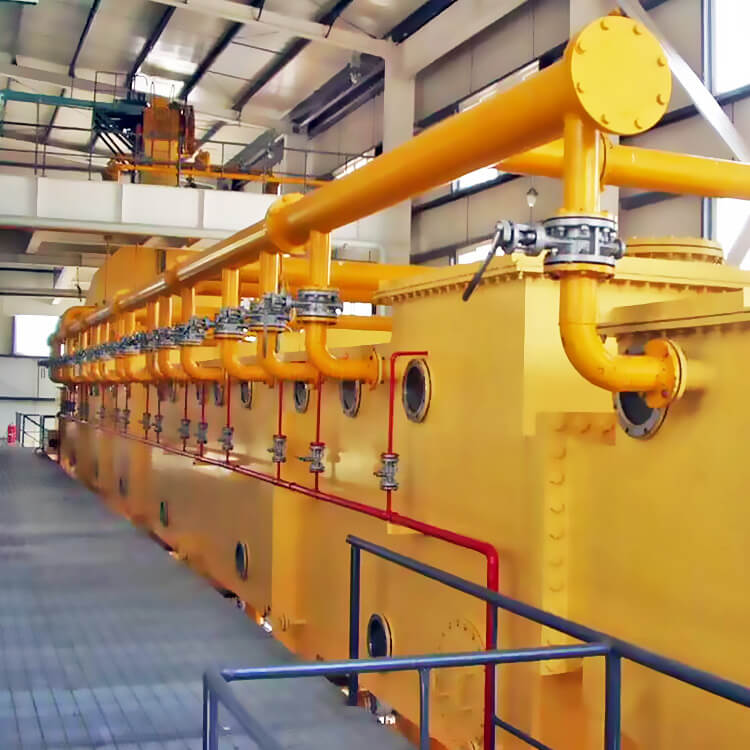
Energy-Efficient Vacuum Evaporation for Miscella Processing
The Huatai Solvent Vacuum Evaporation System is the critical link between the solvent extractor and the refining plant, separating hexane solvent from the oil-rich miscella through a multi-effect vacuum evaporation process. By operating under negative pressure, the system reduces boiling points significantly — allowing the use of secondary steam from the Desolventizer-Toaster (DT) as the primary heat source and achieving approximately 30% steam savings compared to atmospheric evaporation. Available in 2-stage and 3-stage configurations, the system processes miscella with oil concentrations from 20-30% input to 99.5%+ crude oil output, with residual solvent content below 50 ppm. Capacities range from 30 TPD for small extraction plants to 1,500 TPD for large-scale crushing complexes, with operating vacuum levels of 0.04-0.08 MPa ensuring gentle thermal processing that prevents oil degradation.Technical Specifications
| Parameter | 2-Stage System | 3-Stage System |
|---|---|---|
| Capacity | 30 – 600 TPD | 100 – 1,500 TPD |
| Miscella Concentration (Input) | 20 – 30% | 20 – 30% |
| Oil Purity (Output) | 99.5%+ | 99.5%+ |
| Evaporation Stages | 2 | 3 |
| Steam Consumption | 200 – 250 kg/t oil | 150 – 200 kg/t oil |
| Operating Vacuum | 0.04 – 0.06 MPa | 0.05 – 0.08 MPa |
| Residual Solvent in Oil | < 50 ppm | < 20 ppm |
| Solvent Recovery Rate | ≥ 99.5% | ≥ 99.7% |
| Cooling Water Consumption | 15 – 25 m³/t oil | 12 – 20 m³/t oil |
| Material of Construction | Stainless steel (contact parts) | Stainless steel (contact parts) |
Vacuum Evaporation Working Principle
Multi-effect vacuum evaporation separates solvent from miscella using reduced boiling points and secondary steam recovery.
Miscella Pre-Heating
Miscella from the extractor (20-30% oil concentration) passes through a series of heat exchangers, using condensate and waste heat streams to pre-heat the miscella to near-boiling temperature before entering the first evaporator. This heat integration recovers energy that would otherwise be wasted.
First-Stage Evaporation
The pre-heated miscella enters the first long-tube rising film evaporator operating under vacuum. Secondary steam from the DT provides the heating source, evaporating the majority of the solvent. The miscella concentration rises from 20-30% to approximately 60-70% oil.
Second-Stage Stripping
The concentrated miscella enters the second evaporator or stripping column, where direct steam injection and deeper vacuum remove the remaining solvent. The oil concentration increases to 99.5%+ with residual solvent content below 50 ppm (typically below 20 ppm in 3-stage systems).
Solvent Condensation & Recovery
Evaporated solvent vapor flows to the condenser system where it is condensed back to liquid hexane. The recovered solvent is separated from water in the solvent-water separator and returned to the solvent work tank for recycling back to the extractor.
Crude Oil to Refining
The fully separated crude oil, now containing less than 50 ppm residual solvent, is pumped to the crude oil storage tank and subsequently to the refining section. The low residual solvent level ensures safe handling and meets all international food safety standards.
Why Choose Huatai Vacuum Evaporation
30% Steam Savings
Negative-pressure operation reduces solvent boiling points by 15-25°C compared to atmospheric evaporation. This enables the use of secondary steam from the DT as the primary heat source for the first evaporation stage, eliminating the need for fresh steam and delivering approximately 30% total steam savings across the evaporation system.
Thermal Degradation Prevention
Operating temperatures are kept 15-25°C lower than atmospheric evaporation thanks to the vacuum environment. This gentle thermal processing prevents oxidation, color darkening, and phospholipid degradation in the crude oil — producing a higher-quality feedstock for the refining section and reducing bleaching earth consumption.
99.5%+ Solvent Recovery
The multi-stage evaporation and stripping process achieves over 99.5% solvent recovery from the miscella, with 3-stage systems reaching 99.7%+. This high recovery rate directly reduces operating costs by minimizing fresh solvent make-up requirements and ensures the crude oil meets safety standards for residual solvent content.
Applicable Extraction Plants
Huatai vacuum evaporation systems serve all solvent extraction plant configurations and oilseed types.
Soybean Extraction Plants
The highest-volume application for vacuum evaporation. Soybean miscella at 20-25% concentration is processed to crude oil with solvent content below 20 ppm, ready for degumming and refining.
Rapeseed / Canola Plants
Pre-pressed rapeseed cake yields miscella at 25-30% oil concentration. The evaporation system handles the higher concentration while maintaining gentle thermal processing to preserve canola oil quality.
Sunflower Extraction
Sunflower seed miscella processing requires careful temperature control to avoid wax precipitation issues in the evaporator tubes. Huatai's rising film design minimizes residence time and fouling.
Cottonseed & Rice Bran
Cottonseed and rice bran extraction plants benefit from the multi-stage system's ability to handle varying miscella concentrations and the lower operating temperatures that prevent gossypol darkening and rice bran oil degradation.
Frequently Asked Questions
How does vacuum evaporation save energy?
By operating under negative pressure, boiling points are reduced significantly. This allows the use of secondary steam from the DT as the primary heat source, saving approximately 30% steam compared to atmospheric evaporation. The vacuum environment also reduces the thermal load on the oil, improving crude oil quality while cutting energy costs.
What is the final oil purity after evaporation?
The system produces crude oil with solvent content below 50 ppm (typically below 20 ppm in 3-stage systems), well within safety standards. This extremely low residual solvent level ensures safe handling of the crude oil and compliance with international food safety regulations for edible oil production.
Can the evaporation system handle different miscella concentrations?
Yes, the system is designed to handle miscella concentrations from 15% to 35% oil, with automatic adjustment of evaporation parameters. Whether processing lean miscella from soybean flakes or concentrated miscella from pre-pressed rapeseed cake, the system self-adjusts steam flow and vacuum levels to maintain optimal separation efficiency.
Complete Your Extraction Plant
Solvent Vacuum Evaporation Sys
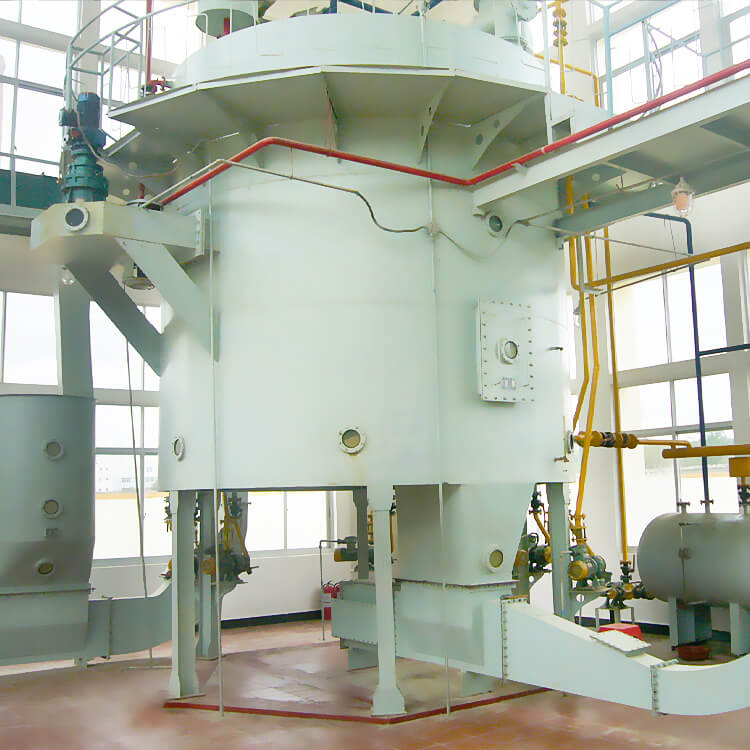
Edible Oil Extractor
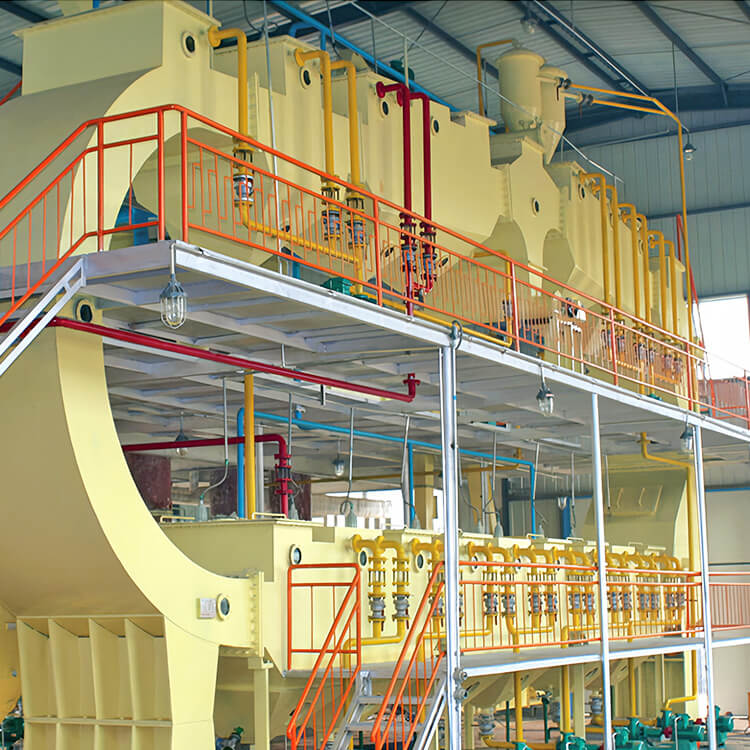
Solvent Recovery Systems
Looking to Reduce Evaporation Energy Costs?
Tell us your extraction plant capacity and miscella concentration — our engineers will design a vacuum evaporation system that maximizes solvent recovery while minimizing steam consumption.
Send Us a Message
Fill in your project details below — our engineering team typically responds within 48 hours with a customized proposal and preliminary process flow diagram.