
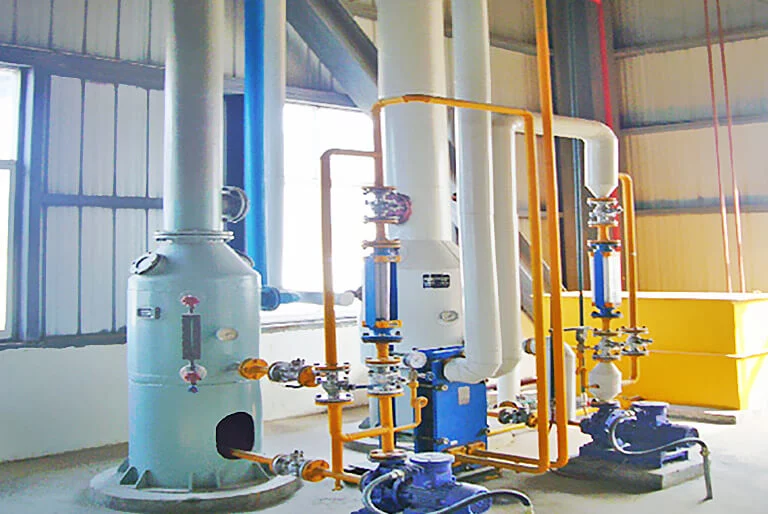
Hexane acts less like a raw material than a circulating inventory. It arrives by road tanker, soaks the flake bed, leaves with meal and oil, returns through condensers to a balance tank meant to hold level. When that level creeps down week after week, money leaves silently and nobody files a report. Operators who learn the loop find leaks before the smell reaches the fence.
Where hexane leaves the loop
Five exits matter. Meal leaving the desolventizer carries traces; drier, cooler and aspiration stages finish the rest, and residue rides out with the cake. Non-condensable gas from the condenser bank holds vapour that coolant failed to knock down. Wastewater from the separator carries dissolved hexane unless stripped before discharge. Flanges, pump seals, stuffing boxes, gauge points and thermowells leak too small to see, too steady to ignore. Oil leaving the stripper keeps a residual fraction that edible oil refining absorbs.
A sixth hides in solvent quality. Heavy ends gather as gums, wax and soapstock, while oil traces cycle through the tank. The mixture boils across a wider band, drags droplets into the vent. Make-up masks the symptom for months.
The recovery train, block by block
Miscella leaves the extractor oil-rich and enters the evaporator set. The first vessel boils off most hexane under modest vacuum. A second, deeper in vacuum, concentrates further. A packed stripper finishes with direct steam; oil leaves hot, clear, nearly odourless.
Vapour meets the condenser bank. Condensate drops into the horizontal solvent-water separator, where two immiscible layers divide at the interface. Hexane floats back. Water heads for stripping so dissolved solvent gets recovered. A solvent recovery system lives or dies on that separator: a poor split sends hexane out with water, water back with solvent.
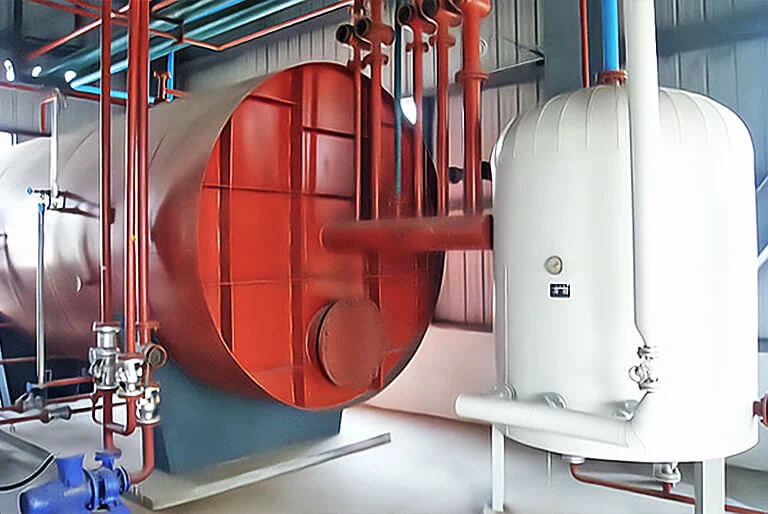
Meal runs in parallel. Inside the desolventizer, steam sparges the bed and vaporises trapped hexane; toasting, drying and cooling follow. Vapour from the tower joins the condenser bank. Gas that refuses to condense passes a baffled mineral oil scrubber, where circulating oil catches the last hexane before the vent clears. That scrubber separates a tight circuit from a permanent, unseen bleed.
Suction comes from steam ejectors or liquid ring pumps. Deeper vacuum lowers boiling point, protects colour, trims live steam demand, yet pulls more non-condensables into the train.
Condensers and the tail gas question
Surface condensers keep cooling water and solvent apart. Wastewater handling simplifies; the design suits sites with clean water. Direct-contact types mix the two and separate afterwards, saving surface area while loading the separator. Choice follows water quality, ambient temperature and crew available.
Cooling water temperature caps recovery. An exchanger knocks down only what its coolant can chill, so a mill drawing warm river water sends more vapour to the scrubber than an identical design on cold well water. Air-cooled units earn their place where water is scarce, though they demand more area and horsepower.
Two details vanish from many quotations: a mist eliminator after the condenser, and a knock-out drum, rupture disc and flame arrestor ahead of the pump. Without them, droplets reach the impeller blades and foul the manifold.
Safety hardware overlaps recovery hardware more than buyers expect. Earthing, bonding and lightning protection on every vessel, gas detection across the hazardous zone, flame arrestors on vents, forced ventilation sized for the worst leak, hot work permits that name the loop: each stops an ignition, and most expose a leakage path during inspection.
Solvent quality and water in the working tank
Water is the quiet saboteur. It arrives with wet meal, stripping steam, an inefficient separator. Inside the reservoir it forms a second layer, dilutes solvent, slows percolation, encourages rusting on mild carbon steel. Leave it alone and a slug eventually reaches the extractor, stalling percolation for a shift. A draw-off at the low end, opened routinely, keeps that layer thin; a coalescing settler handles separated water ahead of stripping.
Hexane quality deserves a schedule. Check appearance, moisture content and boiling behaviour at scheduled intervals, against the batch certificate. When the boiling band widens, purge part of the stock. Filtration on the circulating line catches fines that clog nozzles and foul packing.
Finding the biggest loss point
Begin with a mass balance the plant can defend: hexane added against seed processed, tracked over a week rather than one shift. Tank gauging drifts, so pair it with Coriolis flow meters and lab checks on meal and oil.
Then walk the unit with a portable sniffer, at steady state, on a still day. Bag the suspect joint, sample the vent, write the reading down. Most plants discover chronic leaks that have counted as normal for years. Compare desolventizer exhaust, scrubber outlet and water draw-off; the largest figure points at the block needing attention.
Turnarounds pay for themselves once the loop gets opened. Look inside the stripping column for fouled structured packing, check the demister pad for collapse, inspect spiral-wound gaskets on every manway, lift lagging where crevice corrosion hides, test relief valves, recalibrate gas detectors. A leak found with the plant cold costs a morning; the same leak found by a neighbour costs a reputation.
Trend the result. Losses move slowly; a step change after upkeep means a gasket, a seal or a valve left open. A logbook turns a vague smell into a repair order. Our technical note on solvent loss in soybean oil extraction follows the same logic on the suction side.
What to specify when the system is quoted
Ask how vacuum tightness will be proven before handover. Ask which materials touch solvent and water, what margin the condenser carries above design duty. Ask about scrubber packing, sump level control, mineral oil regeneration, nitrogen blanketing. Ask which instruments arrive as standard: level, flow, pressure, temperature, gas detection, calibration certificates, plus interlock logic that trips the line on drift.
Then ask how loss will be measured after start-up, who signs the reading, what support follows if the figure disappoints. A vendor who answers in writing has probably built the loop before. The edible oil solvent extraction equipment range we build covers extractor, evaporators, stripper and recovery blocks as one coordinated train; engineers review layouts before anything gets replaced. If your mill runs while the reservoir keeps dropping, send the layout and last upkeep report; we will point at the block to inspect first. Chat with us on WhatsApp, or call +86 18337263319.
FAQ
What does a solvent recovery system do in an edible oil plant?
It captures hexane that would otherwise leave with meal, vent gas, wastewater or leaks, then returns it to the tank. Evaporators and a stripper pull solvent from oil, the desolventizer pulls it from meal, condensers turn vapour back into liquid, a scrubber catches whatever survives.
Why does hexane loss matter beyond the cost of make-up solvent?
Hexane is flammable, so a leak raises fire risk around hot surfaces. It escapes as a volatile organic compound, which regulators and neighbours notice. A loop losing solvent steadily also signals a worn seal or flooded scrubber, and both hurt oil quality.
Should we choose surface or direct-contact condensers?
Surface units keep water and solvent apart, simplify wastewater treatment and tolerate dirty cooling water less well. Direct-contact units save area but load the separator. Sites with clean, cold water and steady maintenance usually prefer surface designs; water-short sites often choose air cooling.
How is solvent loss actually measured?
By mass balance over a defined window: hexane purchased or transferred into the loop, minus inventory change in the tank, compared against seed processed. Add lab checks on residual solvent in meal and oil, plus a detector survey of flanges and vents. The balance gives the size of the leak; the survey gives its address.
Can the recovery section of an existing line be upgraded without replacing the extractor?
Usually yes. Condenser surface, scrubber packing, separator internals, vacuum source and instrumentation change as a package while the extractor stays put. The work needs an outage window and a measured baseline, otherwise nobody can prove the upgrade worked. Chat with us on WhatsApp, or call +86 18337263319.