

Certification questions surface earlier than before. Buyers of an edible oil plant increasingly arrive holding a retailer questionnaire plus a quality checklist, both asking how any new line will handle HACCP and whether its workshop runs under ISO 9001. Both names get shuffled together constantly. Each answers a different question; treating them as one checkbox costs projects months. This guide separates them: what each framework asks of a running facility, which checkpoints matter along an oil line, what auditors request in practice, plus how to raise the entire regime while machinery awaits commissioning.
What HACCP asks of an edible oil plant
HACCP describes a way of thinking before any certificate appears. Its logic follows fixed sequence. First, name every hazard able to travel with product: stones and metal fragments riding in among seed, chemical residues arriving inside bleaching earth or packaging, biological growth wherever product rests warm and damp. Second, locate steps where those hazards can be controlled, not merely noticed. Third, decide what each controlling step must hold true at all times. Fourth, watch it, continuously or on a schedule somebody owns. Fifth, act whenever the watch shows drift, and record what was done. Sixth, verify this arrangement periodically through checks independent of daily routine. Seventh, keep paperwork proving all the above happened.
Notice what HACCP never does: quality never gets inspected in afterwards. Prevention gets built into flow, which suits an edible oil plant well, because a hazard caught at seed reception costs a bin rejection while the same hazard caught inside bottled goods costs a recall.
What ISO 9001 asks and where it differs
ISO 9001 speaks a different language entirely. Where HACCP chases hazards, ISO 9001 chases consistency: does the organisation define how work flows, then document, follow, measure and improve what was defined? Its interests stretch far past the production hall into purchasing, sales, design, service, supplier management. Internal audits, management review, controlled documents, competence records, corrective actions: these form the backbone.
The difference matters whenever a buyer requests both. HACCP is a product-safety plan sitting close to the process. ISO 9001 is a management frame wrapping the whole company. Both nest comfortably: documentation discipline demanded by ISO 9001 gives HACCP a home; HACCP lends that regime its sharpest, most safety-critical teeth. Auditors of one scheme frequently request evidence the other generates, which explains why serious edible oil plants run them as a pair, never rivals. Our own workshops have operated under ISO 9001 certification for years, and HACCP planning begins at drawing stage of every line.
Critical control points typical for edible oil lines
Where does any oil line actually earn its checkpoints? Experience points at a handful of recurring spots.
Seed reception comes first. Foreign matter, moisture arriving too high, lots of doubtful origin: reception decides what downstream stages must fight. Screens, magnets and lot segregation live here as prerequisite programmes. Prerequisite programmes cover broad hygiene ground; formal control points sit only where lost control would leave product unsafe, a distinction auditors probe hard.
Storage and conditioning follow. Watch for condensation on cold surfaces, warmth pockets inside silos, insect activity between deliveries, plus moisture behaviour during conditioning ahead of pressing.
Pressing and filtration carry their own watch items: hopper feeding that stays steady, cake leaving the press in expected condition, filter cloth kept honest, oil running bright instead of cloudy.
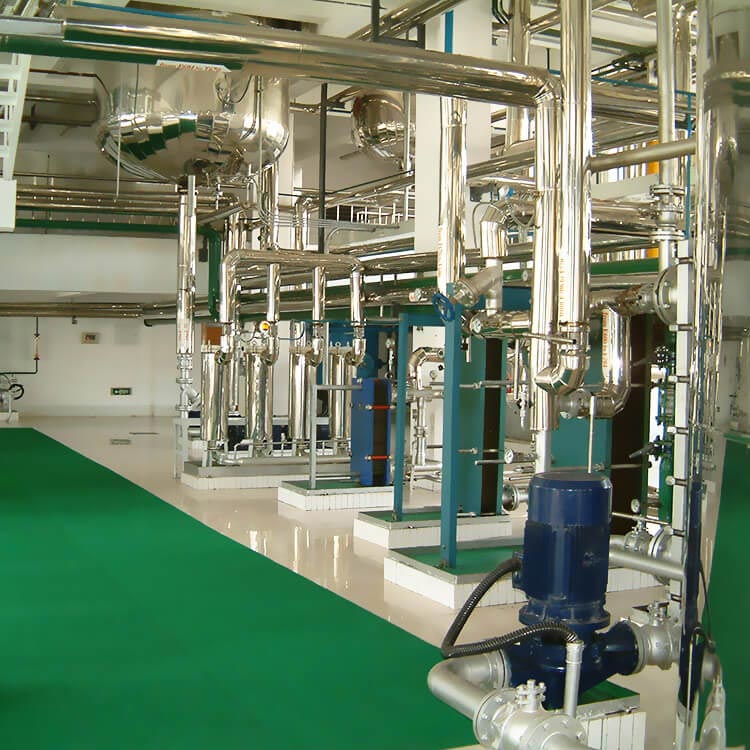
Edible oil refining holds perhaps the densest cluster. Dosing accuracy for degumming and neutralising agents, separation clarity at the centrifuge, careful bleaching earth handling, vacuum steadiness during deodorising: each marks a step where risk gets controlled, never merely observed; each therefore a candidate for formal surveillance.
Finishing and dispatch close the loop: polish filtration, container integrity, seal checks, warehouse segregation of released versus held goods.
Not every watch item becomes a formal control point; hazard analysis decides, line by line. Still, the walk above shows where that conversation starts.
Documentation an auditor expects
Auditors rarely admire machinery. They read paper. The core set stays stable across schemes: the hazard analysis worksheet with its reasoning shown, monitoring records per control point, calibration sheets proving instruments behind those logs were honest, corrective action files tying each nonconformity to a documented response, verification schedules with outcomes, supplier qualification folders for seed sellers, earth suppliers, packaging vendors, traceability running from delivered lot to dispatched pallet, a rehearsed recall procedure, and training files showing operators learned the routine instead of inheriting it.
The habit auditors test hardest is consistency between records and reality. They pick a pallet, walk backwards through its paperwork, and check whether the file's claims match what the floor did.
Building the system alongside commissioning
Here sits one practical advantage of a new line: a plant's quality system grows alongside machinery instead of being retrofit onto it later. Instruments arrive ordered alongside equipment, so monitoring points map onto real nozzles and gauges. Operators learn routines during commissioning trials, when machines run gently and queries are welcome. Documents get written against actual hardware names on the floor rather than generic templates. Configuration choices matter here too: batch and continuous layouts demand different monitoring styles, covered in depth in our guide to batch, semi-continuous or continuous edible oil refining configurations.
Retrofitting paperwork onto a running plant is possible, and facilities attempt it routinely, yet such retrofits cost extra attention and stick less deeply than one raised alongside commissioning. Our edible oil refining equipment range accommodates the monitoring points an oil line's hazard analysis typically names, and our engineers have raised plants across a ten to two thousand tonnes per day span since 1988, workshops certified to ISO 9001; see what our engineering team documents for every project.
An edible oil mill that plans its quality system early ships consistent first batches sooner and spends fewer nights reconstructing paperwork for auditors. Planning HACCP and ISO 9001 into a new operation? Tell us the certification targets your buyers expect plus the scale you aim for; we will map checkpoints against the configuration before any machine gets quoted. Chat with us on WhatsApp, or call +86 18337263319. The first review costs nothing.
FAQ
What does HACCP actually ask of an edible oil plant?
A fixed sequence: analyse hazards from seed to dispatch, identify steps controlling them, define what each must hold, monitor it, respond to drift, verify the arrangement at intervals, keep proof the routine runs. Prevention sits at its centre, not end-of-line inspection.
How does ISO 9001 differ from HACCP for an oil plant?
ISO 9001 manages consistency across the whole organisation: defined processes, controlled documents, internal audits, management review, improvement. HACCP remains product-safety focused, centred on process dangers. The pair nest well, and serious plants run them together rather than choosing one over the other.
Which control points matter most on an edible oil line?
Reception screens and segregation, storage and conditioning behaviour, pressing steadiness, filtration clarity, the edible oil refining cluster of dosing, separation, earth handling and vacuum, plus finishing checks on polish filtration and container seals. Hazard analysis decides which become formal control points on each specific line.
What records does an auditor expect from an edible oil plant?
Hazard analysis worksheets, control-point monitoring logs, calibration records, corrective action files, verification outcomes, supplier qualifications, traceability from lot to pallet, a rehearsed recall, and operator training files. Auditors check whether the paper matches the floor, walking backwards from a chosen pallet.
Can a quality system be built during plant commissioning?
Yes, and commissioning remains the cheapest moment. Instruments arrive with the equipment, monitoring points map onto real fittings, operators train during gentle trials, and documents carry the true names of machines. Retrofitting the same system later costs extra and holds less. Chat with us on WhatsApp, or call +86 18337263319.