
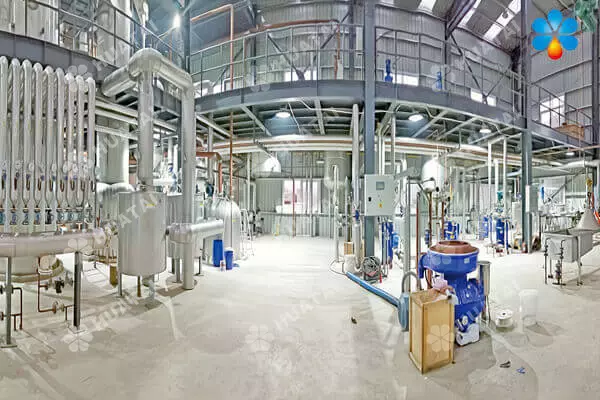
A processor outside Khulna sent us a hand-drawn layout last spring. Two tanks, a filter, a column of vessels labelled simply "edible oil refining". He wanted to know which part he had sketched wrong.
Nothing was wrong. He had put three different plants onto one sheet, which is what happens when a single word gets used at once for a stage, a route and a machine.
Searchers typing in an edible oil refinery process usually want one of two things. Some want the steps written out. Most want help deciding what to buy. Steps get one block below. The decision gets everything after it.
What an edible oil refining train actually includes
Four operations show up in nearly every edible oil refining plant, always in the same order.
Degumming first. Phosphatides hydrate out, sometimes with acid or enzymatic conditioning ahead of the water.
Deacidifying second. Chemical paths dose caustic and separate the soap phase. Physical ones leave those acids alone and strip them later under vacuum.
Bleaching third. Adsorbent earth pulls pigment, oxidation products and trace metals out of suspension.
Deodorizing last. Live steam sweeps away volatile compounds carrying smell and taste.
Dewaxing, winterization and palm oil fractionation hang around those four rather than inside them. Nail the sequence and rival supplier proposals finally become comparable. Leave it fuzzy and you will spend a week arguing about schemes never doing the same job.
Chemical or physical: the first fork
Route comes before hardware, and this choice constrains everything downstream.
Chemical edible oil refining neutralizes with lye. It swallows variable acidity without complaint, cleans up rather more than credited, and hands you soapstock to sell or treat.
The physical route refuses caustic. Acidity leaves as vapour during vacuum stripping, so no heavy phase appears at all. The demand sits upstream instead: degumming and bleaching must run far cleaner, since scrubbing that neutralizing used to provide has gone.
Feed decides. Acid-rich rice bran and palm lean physical. Clean soybean or sunflower seldom needs it. Anyone recommending a path before asking what arrives at your gate is guessing, and our palm oil production line page shows how storage and handling upstream shape that answer.
Batch, semi-continuous or continuous
Mode is where first-time buyers lose the thread, because these same four operations get packaged three ways.
Batch units treat a charge at a time. Sequential steps, shared vessels, simple steel. They forgive irregular feed, tolerate an operator still learning the panel, and grow by adding shifts or another vessel rather than by re-engineering the facility.
Semi-continuous designs hold some stages flowing while others, colour treatment and deodorizing especially, stay discrete, with buffer tanks smoothing the joins. Throughput climbs without full instrumentation burden.
Continuous trains run steady from gate to packing. Tightest control, most uniform output, smallest footprint for the volume handled. They also insist on steady feed, disciplined maintenance, and technicians able to read a transmitter without calling for help.
A batch edible oil refining section is no junior version of a continuous one. For a mill working single shifts, buying seed seasonally, or selling into several grades, it is simply the honest answer.
Five factors that decide your configuration
Feed and its acidity. What reaches your gate sets both the route and the duty every vessel downstream carries.
Real capacity, meaning running time rather than a nameplate. Ask whether the plant works most of the year or only inside a harvest window, because identical hardware gives very different answers to that question.
Grade. Bottled cooking oil, industrial frying fat and export-grade salad oil pull different finishing duties, and our edible oil refining equipment range covers versions of each.
Utilities. Steam pressure, cooling water, chilled water, compressed air, power quality. A continuous deodorizer hanging off an unpredictable boiler is a reliable way to discover the boiler's limits.
People. Who covers nights, what machinery they ran before, whether your electrician can calibrate an instrument. In our experience that settles more arguments than any flowsheet does.
Where the refining train meets extraction
No train stands alone.
Upstream, a solvent extraction stage decides what lands on you. Residual solvent, moisture, suspended fines and carried-over phosphatides arrive as extra duty on your vessels.
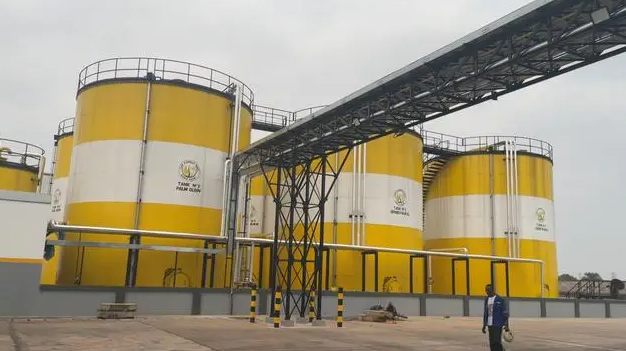
Downstream, packing and storage set the target. Oil going straight into jerrycans needs less polishing than stock bound to sit through a hot season in a warehouse.
Mark those boundaries on purpose. Intermediate tankage buys scheduling freedom. Shared utilities avoid the startup failure in which the deodorizer starves the moment the extractor comes up to rate. Our soybean oil production line page walks one complete route from seed through to packed product, if you want those interfaces drawn out.
Specification mistakes worth avoiding
Naming capacity without operating hours behind it. Choosing a path before anybody has tested the feed. Sizing a deodorizer for a duty the colour stage cannot deliver. Leaving steam, vacuum and cooling water to the last drawing. Treating operator training as somebody else's problem. Discovering two months in that critical spares were never part of the order.
Planning an edible oil refining unit, or working out why the one you own will not hold its spec? Send your raw material, target grade and running hours. We will say plainly which route and mode fit, and where your current plant may be fighting itself. +86 18337263319. No charge for the read. Chat with us on WhatsApp →
FAQ
What is the edible oil refinery process in simple terms?
Four operations in sequence. Degumming removes phosphatides, deacidifying deals with free fatty acids, bleaching with adsorbent earth handles colour and trace metals, and deodorizing under vacuum finishes the job. Dewaxing, winterization and palm oil fractionation join those four depending on the oil and the grade.
Should a new plant choose batch or continuous edible oil refining?
Batch suits seasonal material, single-shift work and several grades from one line. Continuous suits steady feed, long running hours and a tight specification. Semi-continuous sits between them. Capacity alone rarely settles it; how many hours you actually run usually does.
Can a batch edible oil refining unit be converted to continuous later?
Partly. Vessels, tankage and utilities designed with headroom can often be reused, while control systems, feed pumps and heat recovery usually need replacing. If expansion is likely, say so at the design stage, because foundations and pipe runs cost far less sized once than twice.
Physical or chemical edible oil refining: how do I decide?
Start from acidity and gum content in the crude edible oil you will actually receive. Acid-rich material such as rice bran or palm favours the physical approach, provided degumming and bleaching are up to the job. Low-acid soybean or sunflower is normally treated chemically without difficulty.
What do you need from us to configure an edible oil refining line?
Your raw material and its typical acidity, your target grade and specification, the hours and weeks you intend to run, plus the utilities on site. With those we can propose a route, a mode and a vessel list, and flag anything upstream needing attention first. Chat with us on WhatsApp, or call +86 18337263319.