
Fat reaches the factory gate locked inside tissue that will not wait. Rendering is the trade of setting it free with heat, and a rendering plant is judged by three decisions made long before steel arrives: which course the process follows, which grade the output serves and how the building treats its neighbours. Buyers who settle those three early pose sharper questions, and better questions shorten every quote that follows.
A companion piece walks through how a complete animal fat processing line is laid out, from chilled receiving to clarified oil. This piece stays inside the hall itself, where the real choices live.
What rendering means for animal fat: wet and dry routes
Renderers coax fat from tissue with heat, applied two ways. The wet path injects steam directly or adds water to the vat, diluting the liquor from the start; dilution speeds the transfer and shields delicate material from scorch, yet it hands the plant far more liquid to clarify downstream. The dry path leans on heated jacket surfaces and keeps added water out of the vessel entirely, so what emerges is thicker, darker and considerably simpler to settle.
Neither route triumphs outright. Wet suits wetter supplies, lighter colour targets and specs where scorch marks spoil the product. Dry suits compact sites, drier trim and operators who would rather pour their effort into pressing than spinning water away. Batch melting lets small sites swap recipes between charges; continuous systems reward steady volumes with steadier output. The path you pick decides half the hardware schedule, so pick it against your own supply, never against a pamphlet.
Raw materials and the two grade routes
Abattoirs and meat plants supply everything: trimmings, bones, skin, offal and the fat skimmed from cooking water. Freshness dictates the outcome, because fat left standing oxidises, darkens and carries its smells into every subsequent stage, and no reheating rescues that.
The two grade paths then fork. Edible tallow and lard serve food manufacture, which demands a chilled cold chain from the slaughter floor, stainless contact faces, segregated hygiene areas and oil that stays fit for human consumption end to end. Technical fat serves soap, oleochemicals, leather dressing and feed, tolerates broader supplies and asks for simpler handling in exchange. A grade is not an afterthought bolted onto a standard line; it shapes the buildings, the surfaces and the workflows together, and a hall laid out for one spec converts to the other only with difficulty.
The destinations differ just as sharply. Food-grade output heads toward margarine benches, bakery shortening and frying kettles, while the technical stream feeds soap vats, candle moulds, lubricant blenders and stockfeed pellets, and each destination writes its own expectations onto the fat before it quits your gate.
Equipment block by block: crusher, cooker, press or decanter, polishing
Size reduction opens the sequence. A crusher or hasher cuts frozen blocks and loose trim into uniform pieces, and uniformity matters more than it sounds: a vessel fed mixed charges renders unevenly, half the batch waiting while the rest overheats. Matched particles load the cookers evenly and drain evenly afterwards. Crusher selection also listens to the bone fraction, because bone-rich loads dull knife edges quickly, and a hasher built for soft trim alone will live in the workshop unless the supplier knew that ratio up front.
The melting block follows, and its design echoes the choice already made. Wet designs inject steam and manage the dilution; dry designs trade on jacket area and gentle agitation.
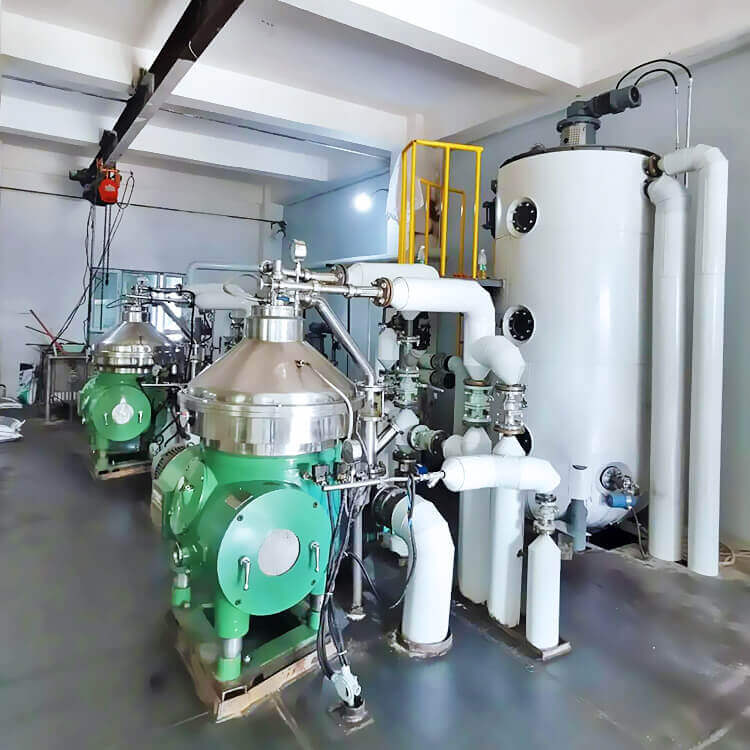
Separation is where opinions diverge. A screw press squeezes the solid cracklings and recovers the grease that draining leaves behind; it rewards structure and an even flow. A decanter centrifuge takes a thinner, wetter stream and spins the three phases apart without needing much solid backbone. Three-phase units discharge a heavy sludge, a light grease phase and a middle water phase simultaneously, letting operators tune pond depth and scroll differential against whatever the abattoir sent that morning. Plenty of complete lines run both in sequence, pressing first for coarse recovery and decanting the fines afterwards, because each unit quietly covers the weakness of the other. Choosing between them before the feed pattern is known is the commonest early mistake we meet.
Polishing closes the liquid side. Settling tanks drop the coarse solids, and polishing filters or polishing presses catch what settling cannot, so the fat entering storage stays clean, without sediment collecting in dead corners. Skip that block and every downstream customer notices. Our animal fat processing equipment range covers the whole sequence, from crusher to polished oil.
Odour and effluent notes specific to rendering
Rendering plants live or die by their relationship with the fence line. Cooking fat releases vapours that carry, and an unmanaged plume turns neighbours into complainants faster than any permit hearing can respond. Control starts with containment: closed vessels, covered loading points and captured vapour routed to condensers, where most of the odorous cargo simply drops out as warm condensate, leaving a fraction small enough for the treatment stage to handle. Remaining exhaust passes purpose-built scrubbing before it meets the sky, and that train works only when someone owns it as a duty rather than an accessory.
Water is the quieter problem. Wet routes generate stick water carrying fat and protein; washdown bays and floor drains add their share. Everything needs a treatment plan fixed before commissioning, sized to the setup you chose, because retrofitted drains never fit as well as planned ones. We cover the wider discipline of effluent and emission control in an edible oil plant in a dedicated piece, and the same principles govern the rendering hall.
How rendering output meets edible oil refining
What leaves the polishing block is not yet a product a food maker can accept. Edible tallow and lard pass onward through a shortened version of the vegetable oil chain: washing lifts residual protein and moisture, bleaching clears colour on adsorbent clay under vacuum, and deodorising strips the last of the smell with steam, while the vessels doing that work mirror those standing in any seed-crushing plant, which is why a single engineering team can carry both sides of the fence without reinventing anything. Technical grade usually stops earlier, at clean clarification and drying, because its clientele measures it differently.
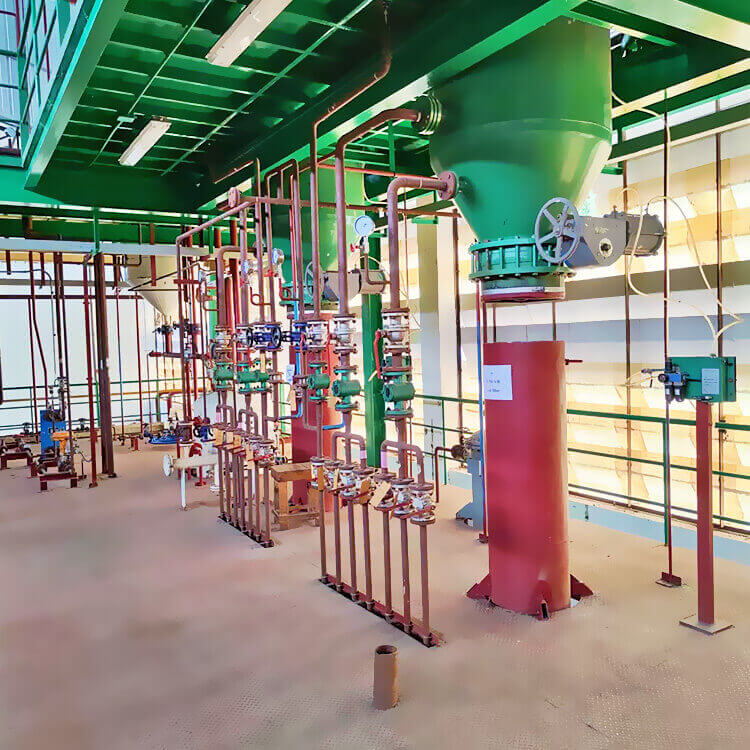
Where your output must land decides how far along the edible oil refining path the plant should reach, and that answer belongs in the layout conversation from day one.
Scale closes the picture. A single-abattoir line, a district collector and an integrated site beside a meat complex each implies its own melting capacity, press count and tier of automation. Our group builds oilseed projects across a ten to two thousand tonne per day span, and animal fat lines are sized against the same yardstick: what the tissue supply genuinely sustains, described in words rather than digits. The capabilities page shows the workshops standing behind that range.
Planning a rendering hall and weighing those blocks against your supply? Send the raw material list, the grade you are targeting and the tonnage you foresee per shift; we will sketch which route fits and where the separation train should sit. Chat with us on WhatsApp, or call +86 18337263319. The first review costs nothing.
FAQ
What is the difference between wet and dry rendering?
Wet rendering injects steam or adds water, so the liquor leaves the cooker diluted and leans harder on the clarification gear. Dry rendering heats through jacket surfaces alone, yielding a thicker liquor that settles readily. The choice follows your material, colour goal and appetite for polishing equipment.
When does a rendering line need a decanter instead of a screw press?
A screw press suits material that holds a solid crackling structure after cooking, while a decanter handles thinner, wetter streams that a cage would struggle to grip. Mixed feeds often get both, squeezed for most of the yield first and spun for fines afterwards. Decide once the load is characterised, not before.
How is odour from an animal fat rendering plant controlled?
Through containment first: sealed vessels, hooded transfer points and captured vapour routed to condensers, where the odorous burden largely condenses out. Remaining exhaust passes purpose-built scrubbing before release, and the system needs an owner on the operations floor. Plants treating odour control as a core duty keep their neighbours and their permits.
Does rendering output need further processing before it can be sold?
Edible tallow and lard do, travelling through washing, bleaching and deodorising in a shortened version of the vegetable oil chain. Technical grade often sells after clean clarification and drying alone, and the gap between those two standards decides how much kit the back end of the hall needs.
Where should a new rendering buyer start?
With the raw material supply and the target grade, in that order, since both steer the route and the machine roster together. Chat with us on WhatsApp, or call +86 18337263319.