
Animal fat arrives at a factory as tissue, not as oil. That single fact shapes every decision downstream. Rendering melts fat out of the tissue with heat; pressing squeezes the remainder from the solid residue left behind. A seed-crushing plant handles dry, conditioned oilseed, while an animal line receives material that spoils within hours, softens with warmth and carries water, so the equipment, hygiene rules and even the building layout diverge from anything a grain-side buyer expects.
Buyers who grasp those differences early pose sharper questions. Sharper questions earn sharper quotations.
What animal fat processing covers: rendering and pressing
Two operations sit at the heart of the trade. Rendering applies heat, and fat cells release their load, either with injected steam and added water in the wet method or through the heated jacket walls of the dry one. Pressing then drives the remaining solid fraction, the cracklings, through a screw press to recover fat heat alone could never free.
Many buyers searching for an animal fat oil extraction machine are really asking about one of those stages, and naming it matters when offers arrive. A press engineered for oilseeds expects dry flake at steady moisture; fed hot, wet cracklings instead, it behaves differently at the inlet, along the cage and at the choke. Name the stage and suppliers quote the correct machine first time.
Raw materials and the two grade routes
Abattoirs and meat processors generate the raw material: trimmings, bones, skin, offal and the fat skimmed from cooking water. Freshness decides almost everything, because lingering fat oxidises, darkens and drags its odours into every later stage.
Two routes split from this point. The edible route serves food manufacture and demands chilled transfer straight from the slaughter floor, stainless contact surfaces throughout, segregated hygiene zones inside the building and oil that stays fit for human consumption from the first tank to the last, which is a discipline closer to a dairy than to a rendering yard. The technical track serves soap, oleochemicals, leather dressing and animal feed, and it tolerates broader supplies and longer holding times in exchange for simpler handling. Neither route is better; they are simply two businesses with different buildings attached. Commit before you buy, because a line laid out for one grade converts to the other only with difficulty.
The line section by section: receiving, melting, pressing, clarification
Receiving comes first. Material arrives in insulated bins or trucks and moves straight into chilled holding, where a hasher cuts it into uniform pieces. Uniform pieces melt uniformly. That sounds trivial until a cooker receives frozen blocks mixed with loose trim, and half the charge waits while the rest renders.
Melting follows. Batch cookers suit smaller shops and changing recipes; continuous low-temperature systems suit steady volumes and lighter colour targets. Wet systems inject steam directly, which speeds the transfer and suits some grades, while dry designs keep added water out, a help where emulsions complicate separation. The right pick follows your material mix, not a catalogue.
Pressing then recovers what draining leaves behind. Cage clearance, shaft speed and choke pressure decide how hard the machine works the cracklings. Push too hard and fines flood the oil; ease off and fat stays locked in the cake. An experienced operator reads the material, and a press built with those adjustments within easy reach makes that reading possible.
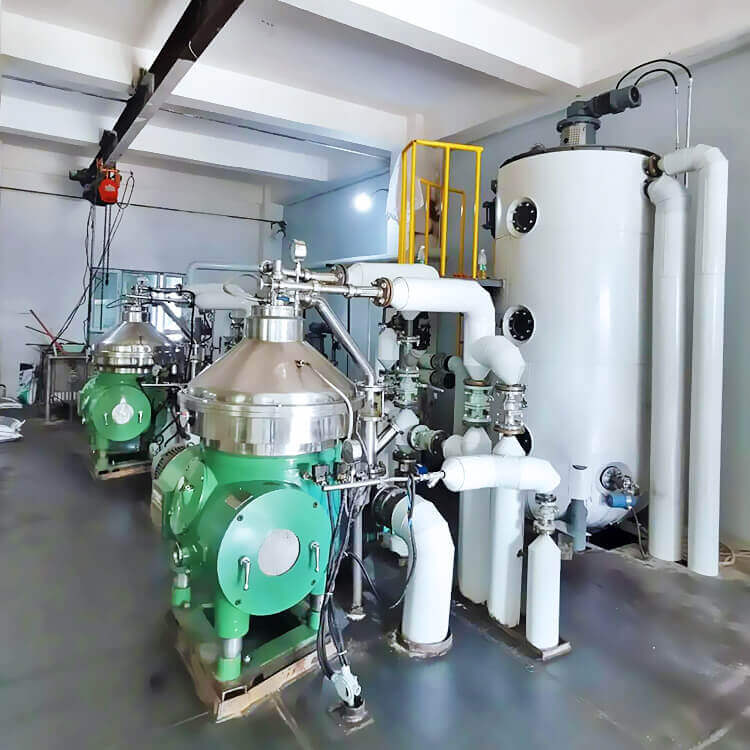
Clarification closes the wet side. Liquid fat leaves the cookers carrying water, fines and protein particles, so settling tanks take the coarse load, a decanter centrifuge spins out the fine solids, and polishing filters catch what remains before storage. Our animal fat processing equipment range covers that sequence from chilled receiving through clarified oil.
Where the fat line meets edible oil refining
Edible tallow and lard pass through a shortened version of the vegetable oil chain. Washing removes residual protein and moisture, bleaching clears colour on adsorbent clay under vacuum, and deodorising strips odour with steam at high temperature. The vessels look familiar to anyone who has walked through a vegetable oil facility, and that familiarity helps because one engineering team can design both sides of the fence.
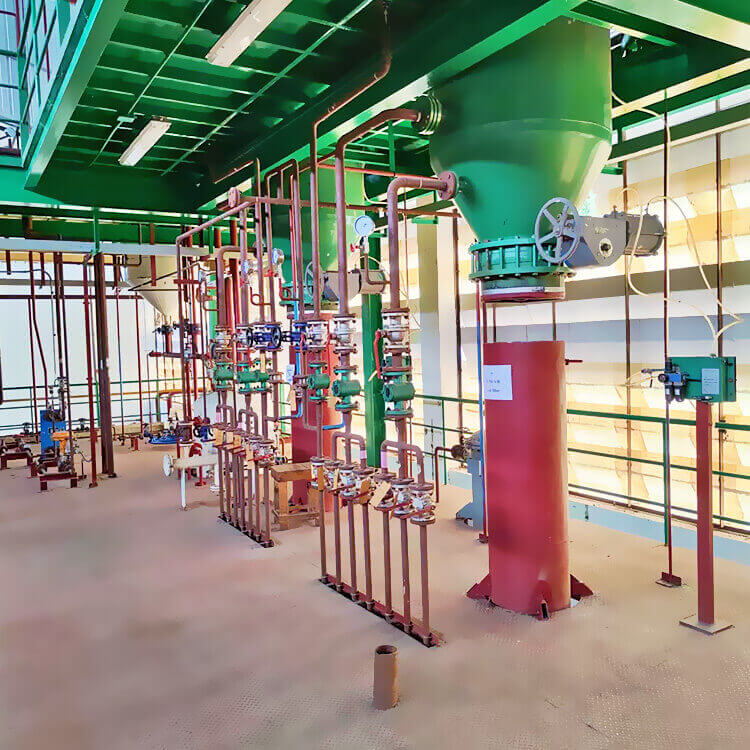
Technical grade often stops earlier, at plain clarification and drying, because its customers hold it to a different standard than a food manufacturer does. Where your product must land decides how far along the edible oil refining path the line should reach, and our edible oil refining equipment page lists the vessels that both industries share.
Utilities and handling notes
Steam dominates the utility list, since cookers, deodorisers and tank jackets draw on the boiler, and the boiler rating should be fixed together with the cooker bay rather than guessed after the machines are ordered. Cooling water serves vacuum systems and press bearings. Effluent from wash water and floor cleaning needs a treatment plan agreed early, because odour complaints close neighbours' ears faster than any permit opens them.
Storage keeps fat liquid and shielded from air through insulation, gentle circulation and tanks without the dead corners where sediment collects. Pumps and pipework are sized on the viscosity of warm fat, and a line that cools overnight must warm up without drama before the morning shift begins.
Scale decisions stay simple when you describe them in words rather than figures. A small line serving one abattoir, a mid-scale collector drawing from a district and a large integrated site beside a meat complex each imply distinct melting systems, separate press counts and another tier of automation. Our group engineers oilseed projects from ten up to two thousand tonnes per day, and animal fat lines are judged against the same yardstick: what the tissue supply can actually sustain. The capabilities page shows the workshops behind that range.
Want a layout reviewed before you commit? Send the material list, the grade you are targeting and the tonnage you expect per shift; we will sketch which melting system fits and where your installation should hand over to edible oil refining. +86 18337263319. No charge for the review. Chat with us WhatsApp →
FAQ
What is the difference between rendering and pressing in animal fat processing?
Rendering applies heat to release fat from tissue, while pressing squeezes residual fat from the solid cracklings after melting. Complete lines use both, because heat alone leaves saleable fat locked inside the solid fraction and pressing alone cannot process raw tissue.
Can one line produce both edible tallow and technical fat?
It can be built to, with segregated hygiene zones and dedicated storage, but the two disciplines differ enough that most operators commit to one grade and lay the plant out accordingly. Converting later means touching buildings, surfaces and workflows, not merely bolting on another vessel.
What raw materials does an animal fat processing plant accept?
Trimmings, bones, skin, offal and skimmings recovered from meat processing water. The edible route needs the freshest material with a fast cold chain, and the technical route tolerates broader sources. State your material mix when you request a proposal, since it drives cooker type, press sizing and hygiene design together.
How does fat extraction differ from vegetable oil extraction?
Vegetable oil sits inside a dry seed and is pressed or solvent-washed out under controlled moisture; animal fat sits inside moist tissue and must be melted or pressed free before anything else can happen. The machinery overlaps at the screw press and diverges everywhere else, which is why seed-side experience alone does not guarantee a sound rendering design.
Where should a new buyer start?
With the raw material and the grade, in that order, and everything else follows from those two answers. Chat with us on WhatsApp, or call +86 18337263319.