
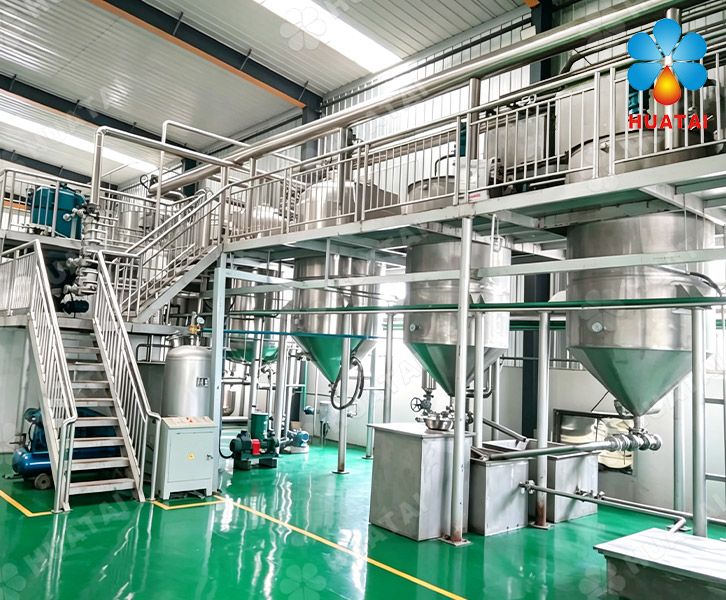
A delegation reached Zhengzhou with sealed sample bags and a single question: which configuration suits their state. Land was secured, a borehole drilled, growers willing, a generator already humming behind the office. What they lacked was an order in which to decide.
Nigeria rewards preparation more than most markets. Supply arrives in pulses, mains electricity cannot be assumed, and the distance between a press shed and a complete mill is wide enough that choosing wrongly costs more to undo than to get right first time. Below is the sequence we walk investors through before any equipment schedule exists.
Nigeria's oilseed map: palm, groundnut, sesame
Begin with what grows inside your collection radius, not with a machine spotted at an exhibition.
Palm fruit dominates the south and east. It reaches a mill perishable, bulky and seasonal, so reception, sterilization and pressing must be sized for the heaviest weeks rather than an annual mean. Our palm oil production line page maps that route stage by stage.
Groundnut anchors the north. Shelling, conditioning and pressing sit at its centre, and aflatoxin screening shapes which buyers will even open a conversation. The groundnut oil production line page sets out those steps.
Sesame threads through the middle belt. It exports profitably both as seed and as pressed product, which means a promoter there answers a commercial question before an engineering one: sell the crop, or convert it.
Cottonseed gathers wherever ginneries operate. One mill we supplied against that crop is documented as our cottonseed project record.
Two crops in reach is common and worth designing for. Running both changes reception, storage and cleaning far more than it changes the press itself, and it protects you against a failed harvest in either catchment.
What power realities change in your design
Uninterrupted supply from the national grid is not a safe assumption. Most mills generate part of their own requirement, and that single fact reshapes specification more than any other local condition.
Voltage swings punish windings, contactors and control cards. Ask for soft starters or variable speed drives on the heavy motors, protection sized for a brownout rather than a clean trip, and a distribution board laid out so a fault in one section does not darken the whole shed.
Thermal duty needs its own decision. Where steam is required, firing the boiler on residue your process already produces, fibre and empty bunches on a palm route, hulls and shells elsewhere, removes a recurring expense and a fuel dependency together.
Assume something stops without warning. A mill that only performs when every input is nominal will sit idle more than its owner planned for.
Route decisions: press only, extraction or full line
Three configurations cover nearly every enquiry, and the choice follows from your crop and your buyer.
Mechanical pressing alone fits modest throughput, a single oilseed, and an owner who wants a short equipment list, a small crew and a product customers recognise.
Pre-pressing ahead of a solvent stage fits larger plants where oil left behind in cake is worth chasing. It brings a solvent extraction section, recovery equipment, and the operating discipline those demand: more capital, more skill, more supervision.
A complete line adds edible oil refining, so the despatch leaves as bottled grade rather than unrefined edible oil for somebody else to finish. Whether that belongs in your scope depends on who buys from you and where the margin sits.
Matching capacity to local supply
A nameplate figure your catchment cannot feed is the planning mistake we meet most often.
Palm fruit arrives in a flush, thins, then returns. Size reception and storage for the peak and processing for a weekly average you can actually defend, or you will watch fruit rot beside a press running under capacity.
Groundnut and sesame behave differently, arriving as traded goods. The constraint moves from field to purchasing: volume available at acceptable quality, and storage that keeps it sound until pressing.
Work the arithmetic backwards. Count growers, traders and tonnage inside the radius, subtract spoilage and competing buyers, and let that number choose the machine. Huatai builds lines from 10 TPD up to 2,000 TPD, though the only figure that matters is the one your own supply supports.

Execution notes: installation, training, spares
Shipping and site readiness shape the schedule more than fabrication ever does. Confirm foundations, water, drainage and incoming power before the container lands.
Erection is where a drawing meets a slab that sits where nobody drew it. Keep an engineer on site who has built the same arrangement previously; that single decision shortens commissioning more than any other.
Training decides whether a mill is run or merely owned. Two shifts of operators who know startup, shutdown and the fault list will outperform any visiting technician.
Wearing parts should ship with the plant rather than after the first failure. Settle that list early: screws and cages, filter cloths, belting, seals, gaskets, plus instrument spares nobody can source locally.
Planning a mill in Nigeria and want a second read on your layout? Send us your oilseed, target throughput and power situation. We will mark up what we would alter and say why, plainly. +86 18337263319. No charge for the opinion. Chat with us WhatsApp →
FAQ
Which oilseed suits a first mill in Nigeria?
Palm fruit suits investors in the south and east with collection near the gate; groundnut suits the north where shelled nuts trade freely. Decide on secured supply within your radius before touching an equipment catalogue, because availability beats preference.
Can a mill run on generator power?
Yes, many do, though the specification changes. Heavy motors want soft starters or drives, panels need protection tolerant of brownouts, and fuel becomes a running input worth designing around, often by firing the boiler on process residue.
Is a solvent extraction section worth it at small scale?
Rarely below the point where cake leaving the press still holds meaningful value. Solvent brings recovery equipment, safety systems and skilled oversight, which only repay themselves at throughput most small plants never reach.
Should I refine on site or sell unrefined edible oil?
An edible oil refining section on site suits owners selling bottled product to consumers or modern retail. Selling unrefined edible oil to a larger processor keeps capital and complexity down, at the cost of margin someone else collects.
How should capacity be chosen when supply is seasonal?
Size reception and storage for the peak, then processing for a defensible weekly average across the year. A mill built for the best fortnight sits underused later; one built for the mean turns crop away when it arrives. Chat with us on WhatsApp, or call +86 18337263319.