
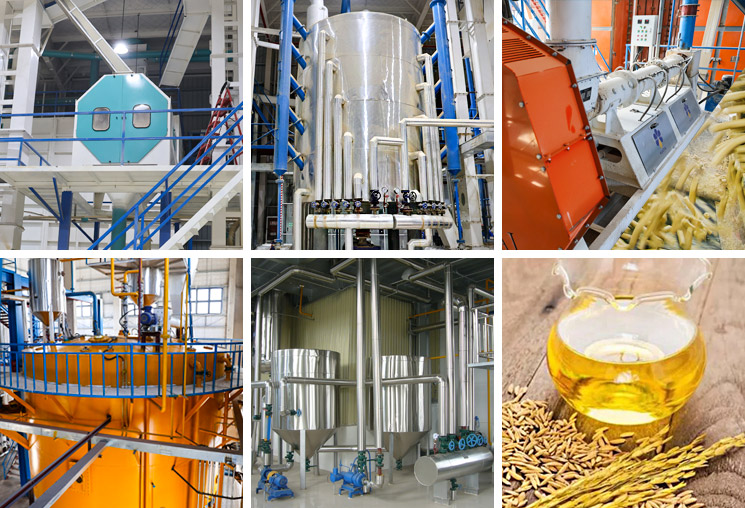
A mill owner in the Mekong delta rang us about hazy bottles. Filters were new, bleaching earth fresh, and the cloud still arrived each evening once his warehouse cooled. Nobody on his team had thought about wax.
Rice bran punishes shortcuts. Stabilize the bran badly and the oil reaching your vessels is already fighting you before a single valve opens. Handle the back half properly and that same feed becomes the most valuable stream on site.
We covered the front half in rice bran stabilization. This piece picks up where that one stopped: unrefined rice bran oil in at one end, saleable by-products out at the other.
Why crude rice bran oil asks more of a refining train
Four properties separate this feed from soybean or sunflower, and each lands as extra duty somewhere downstream, which is where budgets disappear.
Acidity comes first. An enzyme native to bran keeps quietly splitting triglycerides into free fatty acids long after milling stops. Stabilization slows that reaction, while storage time, heat and moisture decide how far it ran before the cargo reached you.
Wax comes second. Bran contains a waxy fraction that dissolves in warm oil and falls out the instant temperature drops. That evening haze in his warehouse was wax rather than dirt.
Pigment comes third. Bran yields a dark, strongly coloured product that reads as low grade on a shelf.
Gums arrive fourth. Phosphatides travel with the oil and foul any downstream vessel given half a chance.
None are defects, yet together they mean a rice bran oil refining train shoulders more work per tonne than most.
From stabilized bran to crude rice bran oil in brief
The upstream half sets your ceiling, so it earns one paragraph.
Bran leaves the mill with hours of grace, not days, and the clock starts immediately. Extruding or pelleting denatures the lipase, drives moisture down, and lends the stock enough stability to survive storage and haulage. Skip that step and acidity climbs before your extractor ever sees the cargo.
From there the path runs through a solvent extraction section, miscella handling, and desolventizing of the meal. Our rice bran oil production line page draws those stages out properly. What matters here is what arrives at your door: acidity, wax load, colour, plus residual solvent and fines arriving with it.

Dewaxing: the step rice bran cannot skip
Winterization is optional on some oils and skipped by plenty of packers. For rice bran it decides whether your product survives a cool night in a warehouse or a chiller cabinet.
The mechanics are unglamorous and unforgiving. Chill the oil slowly under controlled conditions so wax crystals grow large enough to filter, then separate the solids on a pressure leaf filter. Rush the cooling and crystals stay fine, blind your filters, and drag good oil away. Cool unevenly and the crop will not hold on the shelf.
Placement matters too. Dewaxing ahead of deodorizing gives cleaner separation and protects finished stock; leaving it later risks recontaminating oil you have already polished. Degumming and bleaching must have done their job beforehand, since spent earth and residue give crystals a place to hide.
Filter selection, cooling curve and holding time belong in the specification, not in a commissioning conversation, and retrofits hurt. They are also the three items most often absent from cut-price proposals.
Mills that process rice bran only through the paddy flush and switch to a gentler seed for the rest of the year usually discover, somewhere around their second winter, that a setup sized for the easy months cannot hold clarity once the waxy crop returns through the gate.
Physical or chemical refining for rice bran
Given the acidity, the physical approach gets proposed here more often than for any other edible oil worth naming. Live steam under vacuum sweeps free fatty acids away without caustic, so no soapstock appears and neutral oil loss drops sharply.
That bargain has a price. Physical refining for rice bran demands degumming and bleaching that run clean, because the neutralizing stage behind them is gone entirely. Pretreat weakly and the deodorizer inherits every impurity you failed to catch upstream, plus a few you created.
Chemical refining of rice bran stays sensible where acidity swings wildly between batches, or where a young crew needs a forgiving path more than a tight one. It yields soapstock to sell or treat and swallows variation without complaint. Our edible oil refining equipment range spans both, from batch vessels to continuous strippers.
Judge it on what actually arrives across a season, not on the finest sample in a laboratory.
By-products worth designing for
Rice bran pays twice, provided the plant is built to collect the second cheque.
Wax recovered during winterization goes into shoe polish, candles, cosmetics, emulsions and confectionery coatings. It wants washing, filtering, and a heated store for a product solid at room temperature.
Oryzanol, the antioxidant much of the marketing around this oil rests on, survives the physical route largely intact and leaves partly in the deodorizer distillate on a chemical one. Where it matters to your grade, say so during design, because the choice of path moves it.
Deodorizer distillate holds tocopherols, sterols and fatty acids, and deserves a collection vessel rather than a drain, since buyers exist.
Fatty acids stripped during physical refining for rice bran can be condensed and sold on. Each needs tankage, a pump and a written home, plus a buyer who wants it. Facilities that leave them out spend years watching value go down the pipe, and then blame the seed.
Planning a rice bran oil refining section, or wondering why the one you own will not hold clarity? Tell us your raw material, target grade and running hours. We will say plainly which route fits and what it would take to fix. +86 18337263319. No charge for the read. Chat with us WhatsApp →
FAQ
Why does rice bran oil need dewaxing when soybean oil does not?
Bran holds a waxy fraction that most oilseeds lack. It dissolves in warm oil and precipitates as temperature falls, showing up as haze in a bottle or a chilled cabinet. Filtration alone never clears it. Soybean holds far less, so most soybean lines never include a winterizing stage.
Is physical refining for rice bran oil always the right choice?
It suits high acidity and avoids soapstock, but pushes the burden upstream onto degumming and bleaching. Where acidity swings widely between batches, or operators are still learning the panel, a chemical route can be the safer specification.
Can one line handle rice bran alongside other oilseeds?
Often yes, provided winterization and sufficient bleaching capacity are built in from the start. The trap is sizing a shared facility for the easiest stock and adding rice bran later. Retrofitted dewaxing sections cost considerably more than space reserved on the original drawing.
How do I stop free fatty acids rising before the oil reaches me?
Stabilize the bran quickly after milling, keep it cool and dry, and shorten the gap before processing, because lipase does not wait. Everything before your gate sets the acidity your vessels must deal with, so the cheapest control sits upstream.
What by-products can a rice bran oil refining line recover?
Wax from winterization, oryzanol retained through the physical route, deodorizer distillate rich in tocopherols and sterols, and condensed fatty acids from stripping. Each needs tankage and a collection point designed in, far easier at specification stage than as an addition afterwards. Chat with us on WhatsApp, or call +86 18337263319.