
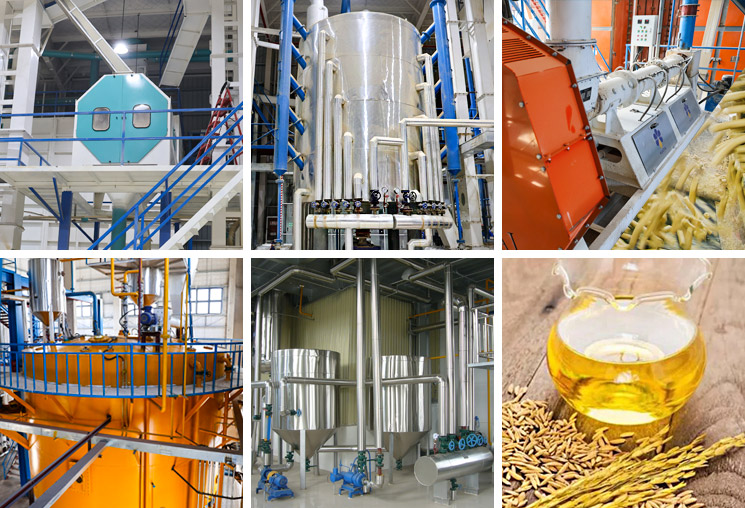
A miller in the Mekong Delta rang us about a rice bran line that never worked properly. The extractor ran fine. The refinery ran fine. The oil still came out dark, sour, and hard to sell at any decent grade. Everyone had studied the extractor. Nobody had studied the twelve hours before it.
That pattern repeats. Buyers shop for extraction capacity, then discover the decisive question sat at intake.
Bran is not a seed
Bran is the outer layer stripped off grain during milling. It holds oil. Less than groundnut, less than soybean, yet plenty to matter once a steady stream arrives daily.
It also holds enzymes. Those enzymes attack that oil the moment milling finishes. Freshly milled material is one thing. Material left in a warm heap through a humid afternoon is another.
So plan around the clock, not around oil content. That part is easy.
The FFA clock nobody draws on the layout
Free fatty acids. FFA for short. That single measure decides whether your product becomes edible oil or gets sold off for soap and feed.
The enzyme behind it is lipase, and warm humid conditions make it quick. Rice mills keep no schedule that suits an oil mill. Feedstock arrives in batches across several shifts, often still hot. Let it sit and the clock runs.
We've watched this on site. Bran piped straight from an attached rice mill behaves one way. Material trucked in from three satellite mills, then held overnight in a shed, behaves differently. Same paddy. Same variety. Different oil.
So this conversation starts at the rice mill, not the extractor. Where does supply come from? How many mills feed you? How far do they haul? How many hours pass before processing? Those four answers shape your configuration more than any equipment rating.
Downstream won't rescue it. A refinery does strip fatty acids out, at the expense of yield, of bleaching earth, of running time. Settle that at the front, or live with the consequences for the facility's life.
Three stabilization routes, and what each demands
Extrusion, or expansion
Feed passes through an expander. Pressure, heat, shear. Lipase gets knocked out, and what leaves is a porous pellet that extracts better than raw material ever will. Most dedicated mills go this way.
It wants steam. It wants power. It wants an operator who understands the machine. Push conditions too hard and you cook the feed, which surfaces later as colour you cannot bleach away.
Steam treatment
Live or superheated steam, held on the material for a period, then cooled and dried. Simpler kit than an expander. It needs a dependable steam supply and careful supervision, since uneven contact leaves pockets untouched. Untouched pockets are precisely what spoils a batch.
Dry heat
Drum dryers, fluid bed dryers, occasionally residual warmth of milling itself when you catch the stream early. Least complex of the three. Also least consistent, and consistency is the entire exercise.
None is universally right. A mill bolted onto one large rice mill faces different problems than a central unit collecting from six small ones. The attached site moves material hot, treats it at once. The collection site fights the clock the moment each truck pulls away. Those two cases rarely reach one answer.
Our pretreatment and conditioning equipment section covers what sits ahead of the extractor.
Extraction and refining: bran is harder than soybean
This is an awkward feedstock. Fine, dusty, clingy with solvent, and it won't percolate the way flaked soybean does. That's why an expander earns its place twice. It stabilizes, and it reshapes the stream into something an extractor can work through.
Then the crude. Rice bran crude carries a heavy FFA load even on a good day, pushing you towards physical refining rather than caustic. Steam distillation under vacuum lifts fatty acids out rather than converting them into soapstock. That suits high FFA well. It also demands cleaner pretreatment and better bleaching, because you forfeit the scrubbing neutralization gives at no extra step.
Wax is the other one buyers forget. Rice bran oil carries it. Leave it in and bottled product hazes the moment a room cools. Customers notice. Dewaxing and winterization need chilling capacity, holding time, and filtration. Nothing exotic. Easy to omit from a quotation.
Our solvent extraction equipment range covers that side.
Sizing: start with paddy, not ambition
Bran is bulky and lean, so scale bites harder than with most oilseeds. Small units struggle, because stabilization doesn't shrink just because you're small, and the refining train stays roughly as long at the modest end as further up.
Supply sets the harder ceiling. Bran is a by-product, so your limit is how much paddy gets milled within hauling distance. Many buyers pick a capacity first, then hunt for feedstock. Backwards. Count the paddy, derive the bran, size the line.
Storage deserves attention too. Bran occupies room, bridges, refuses to flow, and self-heats in piles. Design the silo alongside the process, or you'll shovel it off the floor by month two.
Our rice bran oil production line page walks one full configuration through, from intake to packed product.
Oryzanol: the reason anyone bothers
Rice bran oil holds something most commodity oils lack. Oryzanol, alongside tocotrienols and plant sterols. That's the basis of its premium standing in several markets, and why buyers in Japan, Korea and India ask pointed questions.
Here's the catch. Oryzanol survives careless processing badly. Heavy alkali refining, harsh bleaching and an aggressive deodorizer all eat into it. Physical refining, run with discipline, preserves far more than a chemical route pushed to its limits.
So say early if you intend to sell this as a health oil. The route recovering the most crude is not always the one preserving what customers pay for.
Common mistakes we keep meeting
Treating stabilization as optional. It isn't an extra. It's the process.
Buying the extractor first. Supply and stabilization decide your configuration, never the reverse.
Sizing on ambition. Count paddy milled nearby before picking a number.
Skipping dewaxing to keep the line short. Hazy oil gets rejected, then you retrofit in a hurry.
Copying soybean settings. Different feedstock, different conditions, different refining route.
Heaping material until there's enough to run. There is never a good heap.
FAQ
Why must rice bran be stabilized before extraction?
Bran contains lipase, an enzyme that splits its oil into free fatty acids within hours of milling, especially when warm and humid. Untreated feedstock reaches the extractor degraded, so refining loss climbs and the product drifts towards non-edible uses. Stabilization stops the enzyme.
Which stabilization route should I pick?
Your supply pattern decides. Extrusion suits dedicated mills with steady throughput and steam on hand, and it improves extraction as a bonus. Steam treatment is simpler yet needs even, careful contact. Dry heat is least complex and least consistent. A site attached to one big rice mill and a central plant supplied by several small mills usually need different answers.
Can high FFA rice bran oil be refined with caustic?
Yes, though most prefer physical refining. Caustic neutralization on a high FFA feed makes abundant soapstock, dragging oil away with it. Steam distillation under vacuum suits high FFA better, provided pretreatment and bleaching are sound.
Why does my rice bran oil turn cloudy?
Wax. The crude naturally holds wax that stays dissolved while warm and separates once cooled, leaving the bottle hazy. Dewaxing and winterization chill the oil, hold it, then filter the wax out. Skip that step and your product clouds in cool rooms.
Planning a rice bran line, or fighting one that never performed? Tell us how much paddy gets milled near you, how far the material travels, and what grade you intend to sell. We'll say plainly whether stabilization is your bottleneck. WhatsApp +86 18337263319. No charge for the read. Chat with us on WhatsApp →