
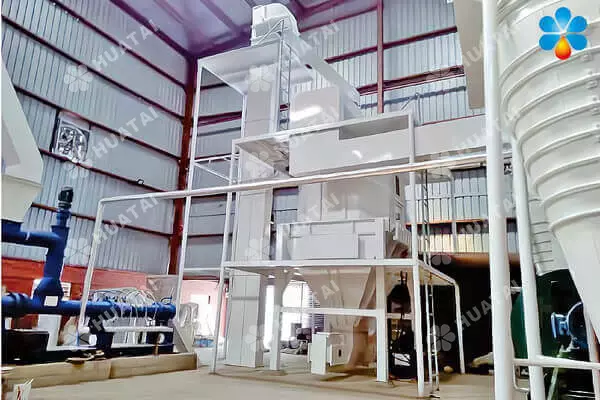
Rice bran is the most impatient raw material in the cooking oil trade, and it sets the rules for everything a 100 TPD edible oil plant must get right. Visitors to reference sites usually arrive asking about output; the wiser question concerns what happens within hours of milling, a narrow window quietly deciding how an entire facility must be arranged. This piece walks through one such project in Bangladesh, from opening brief to the day operators took the controls, collecting lessons that travel well beyond it.
The project brief
Bangladesh imports most of the cooking oil its kitchens consume, and import dependence keeps local edible oil refining in growth mode, with partners expected to understand tropical humidity, variable grid power and monsoon logistics. Domestic capacity keeps expanding to close that gap. Huatai has supplied machinery into this market for customers including Meghna Group of Industries and MRT Agro Products BD, with lines running at around one hundred tonnes per day across rice bran and other oilseeds. Names carry weight. Meghna ranks among the largest conglomerates in the country; its edible oil arm has produced at Meghnaghat for decades. MRT Agro has grown into one of the larger private producers, with rice bran oil among its flagship products.
The full record sits on our 100 TPD Edible Oil Plant in Bangladesh case page. This story stays behind the scenes: why the setup looks as it does, plus what the build taught us.
Why this configuration for the feed and market
Rice bran misbehaves the moment it leaves the mill. A live enzyme inside splits oil into free fatty acids within hours rather than days; careless storage only speeds the damage. Bran arriving late can drift past the point where the gentle physical route in edible oil refining stays economical, forcing caustic treatment with soapstock, heavier effluent load and thinner saleable output. That single fact drives everything downstream. Stabilisation comes first, without exception. Live steam and controlled heat neutralise the enzyme before real harm begins; its residence window matters more than any badge on a vessel.
Solvent extraction follows, because at such scale it is the only practical route for bran. Pressing alone leaves far too much grease locked inside a feed this fine and this lean. The extracted oil then moves through standard stages of edible oil refining: gum removal, bleaching and deodorising under vacuum. Rice bran oil carries wax plus generous oryzanol, so winterisation earns its place as the stage deciding whether bottled product stays clear on a cool shelf.
Flexibility closes the arrangement. The preparation hall accepts mustard, sesame or groundnut whenever bran supply thins between seasons; that multi-seed posture protects the site against the single thing a mono-feed facility cannot survive: an empty intake.
Build and installation notes
Two concerns shaped the build more than any individual machine. Steam came first. Whether a works merely runs or runs well often turns on how vapor is generated, spent, recovered; the lines were specified with condensate return and heat recovery planned from the outset instead of patched in after the boiler arrived. Spares came second. In a market where a particular bearing or seal takes weeks to import, a train built around proprietary parts becomes a monument to downtime. Wear items were standardised to sizes available locally wherever engineering permitted. Unglamorous work. It repays those weeks many times over.
The process logic behind this setup is described section by section on our rice bran oil production line page, and the extraction heart of each works draws on the same edible oil solvent extraction equipment that serves our larger seed projects.
Commissioning and handover
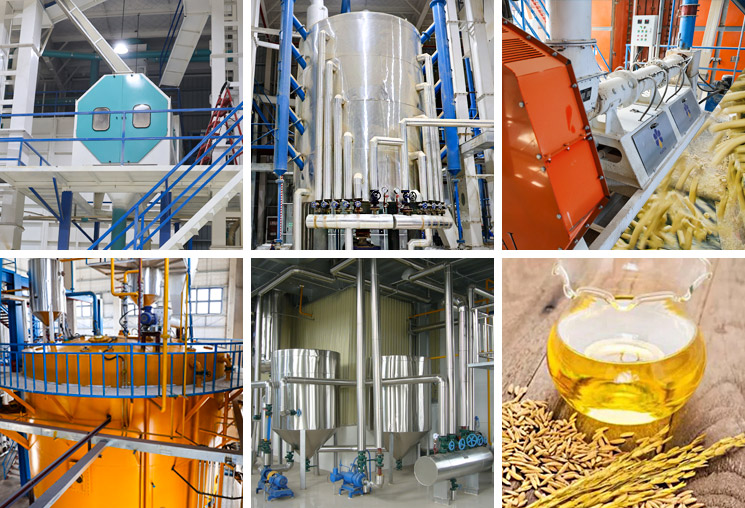
Both were delivered door to door: engineers designed the process, workshops manufactured and shipped the machinery, supervisors guided erection, and trainers commissioned everything alongside the incoming crew. Installation supervision earns its fee where site trades meet vessel tolerances; commissioning is where paper drawings either hold or confess. Instruction remains the part outsiders underrate. Bran stabilisation is the classic case: a well-built facility still turns out poor oil when its crew fails to grasp why residence time matters, meaning training spends real hours on the why rather than the buttons alone. Handover closed with piping isometrics, wiring schedules, test certificates, spares ledgers and a team already running everything under supervision.
What this project teaches similar buyers
Four lessons travel well. Logistics leads: how far bran travels, how long it waits before reaching the gate, decides the edible oil refining route more decisively than any brochure. Utilities follow: steam planning belongs inside the layout conversation, not after it. Spares strategy ranks third, since import lead times become design input in markets shaped like this one. Instruction ranks fourth, as a works performs at the skill level of its crew, never at the skill level of its drawings. None of this is exotic. It is housekeeping with discipline, practiced daily until it becomes culture.
Buyers weighing a rice bran or mixed-oilseed venture in the thirty to three hundred tonne per day band can borrow all four directly. Our group has built edible oil plants across a ten to two thousand tonne per day span since 1988, with workshops certified to ISO 9001, and every proposal still starts from the same question: what does your supply genuinely sustain?
Planning a rice bran or mixed-oilseed line? Send us the material, its distance from the mill, the scale you foresee; we will sketch which route fits before anything else. Chat with us on WhatsApp, or call +86 18337263319. The first review costs nothing.
FAQ
What does a 100 TPD edible oil plant include?
A turnkey scope at such scale covers process design, equipment manufacture, shipping, installation supervision, commissioning, operator training. Sections run from receiving and stabilisation through solvent extraction, then edible oil refining plus packing, each sized to what the intake will actually carry.
Why does rice bran need stabilisation before anything else?
Fresh bran carries a lipase enzyme that hydrolyses fat into free fatty acids within hours of milling. A short thermal treatment stops it, so stabilisation is treated as the opening step, never an optional add-on.
Why is solvent extraction the practical route for rice bran oil?
Rice bran is fine, powdery and lean, so pressing alone leaves too much grease behind in the cake. Solvent extraction recovers that fraction, which explains why essentially every rice bran works at industrial scale is built around it.
Can one facility handle rice bran and other oilseeds together?
Yes, when the preparation section is designed for it from the start. Mustard, sesame, groundnut each bring distinct moisture, hull and particle demands, and a multi-seed layout lets a site switch feed as seasonal availability shifts.
What should a buyer prepare before commissioning begins?
Utilities come first: reliable steam, power, water sized to the agreed layout. Then a spares shelf built around local availability, operators released for genuine instruction rather than handed the keys cold. Chat with us on WhatsApp, or call +86 18337263319.