
Complete Rapeseed/Canola Oil Processing — From Seed to RBD Oil
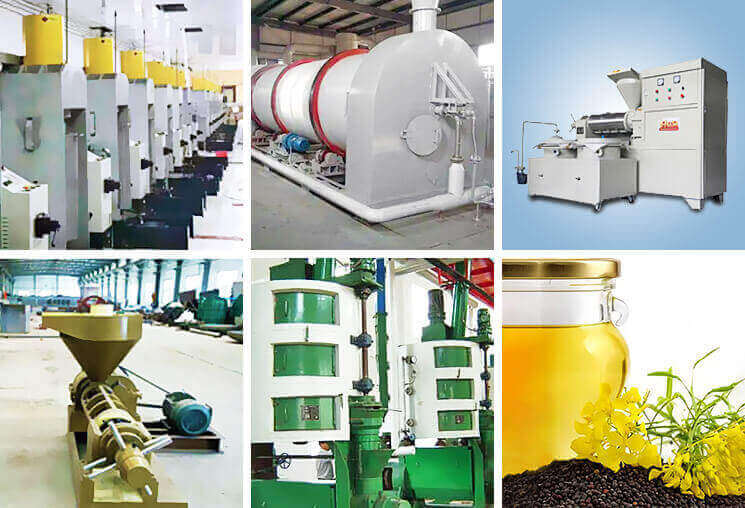
Rapeseed (including canola varieties) is the world's third most produced oilseed after soybean and palm. Huatai's rapeseed oil production line integrates pre-pressing, solvent extraction and full refining to produce high-quality edible oil meeting international canola-grade standards. The process is optimized for high-erucic and low-erucic (canola) rapeseed varieties.
Low-temperature desolventizing preserves the high protein content in rapeseed meal (≥38%), making it a valuable animal feed co-product. Capacities range from 30 to 500 TPD.
| Raw Material | Rapeseed / Canola seed |
|---|---|
| Process Type | Pre-pressing + Solvent Extraction + Refining |
| Capacity | 30 – 500 TPD |
| Final Product | RBD Canola Oil + High-Protein Meal (≥38%) |
Rapeseed Oil Production Steps
From rapeseed/canola seed to clear, bland RBD canola oil.
The line runs through 8 stages. The strip gives the sequence at a glance; the notes below cover temperatures, pressures and yields for each stage.
Cleaning & Conditioning
Vibrating screens and aspirators remove foreign matter. Controlled steam conditioning at 80-90°C adjusts moisture to 7-9% for optimal flaking and pressing.
Flaking & Cooking
Conditioned seeds are flaked to 0.3-0.4mm then cooked at 100-110°C. Cooking ruptures oil cells, reduces viscosity and coagulates protein for efficient oil release.
Pre-pressing
Continuous screw press extracts 60-70% of oil. The pre-pressed cake (14-18% residual oil) proceeds to solvent extraction for maximum recovery.
Solvent Extraction
Pre-pressed cake is extracted with hexane in a chain extractor. Residual oil in meal reduced to below 1.0%. Low-temperature D.T.D.C. preserves meal protein quality.
Oil Refining
Enzymatic degumming (phosphorus <10ppm) → alkali neutralization (FFA <0.1%) → bleaching → deodorization at 220-240°C under vacuum. Produces clear, bland RBD canola oil.
Plant Capacity & Output
Indicative design windows. Final figures are fixed against your available feedstock and erucic acid limits.
| Plant Capacity | 10-2000 TPD rapeseed input; pre-press + extraction from 30 TPD upward |
|---|---|
| Seed Oil Content | 35-42% typical; we size the line to your actual assay, not a catalogue average |
| Total Oil Recovery | ≥97% of available oil with pre-press + solvent extraction |
| Residual Oil in Meal | <1.0% |
| Meal Protein | ≥38% (low-temperature D.T.D.C.) |
| Finished Oil Quality | FFA <0.1%, phosphorus <10ppm, peroxide value <1.0 meq/kg, Lovibond <1.5R |
| Steam Consumption | Typically 250-320 kg steam per tonne of seed — confirmed at design stage |
Key Equipment Systems
Each system is designed and manufactured in-house under ISO 9001 quality management.
| Seed Cleaner | Vibrating screen + aspirator + magnetic separator for complete impurity removal |
|---|---|
| Conditioner & Flaking Mill | Stack cooker with steam injection and flaking rolls (0.3-0.4mm gap) |
| Pre-press | Continuous screw press with adjustable barrel pressure for 60-70% oil extraction |
| Chain Extractor | Multi-stage counter-current hexane extraction achieving <1.0% residual oil in meal |
| D.T.D.C. System | Low-temperature desolventizer-toaster-dryer-cooler preserving meal protein ≥38% |
| Refining Line | Enzymatic degumming + chemical neutralization + bleaching + continuous deodorization |
Applications & Revenue Streams
How processors turn rapeseed oil into food, feed and biodiesel markets.
RBD Canola Oil
Neutral, clear and high-smoke-point. Sells into bottled retail, food service and industrial frying. Low erucic acid and low glucosinolate varieties meet international canola specifications without extra processing.
Canola Meal
At ≥38% protein and under 1% residual oil, this is a premium feed ingredient rather than a by-product. On most projects meal revenue carries a meaningful share of the plant's operating margin.
Lecithin & Fatty Acids
Degumming recovers lecithin and deodorizer distillate captures free fatty acids and tocopherols. Both have established industrial buyers, and we can include recovery skids in the EPC scope.
Biodiesel Feedstock
Where local policy supports it, crude rapeseed oil transesterifies directly into biodiesel. We design the oil room to hold that door open without committing you to it on day one.
Technical Highlights
Engineering innovations for superior rapeseed/canola oil processing and refining.
Enzymatic Degumming
Phospholipase A1 enzymatic degumming reduces phosphorus to below 10ppm — enabling physical refining and eliminating the need for large quantities of bleaching earth.
Low-Temp Desolventizing
Controlled D.T.D.C. temperature prevents protein denaturation. Meal protein content maintained at ≥38% — meeting premium feed specifications.
Canola-Grade Quality
Finished oil meets international canola oil standards: FFA <0.1%, phosphorus <10ppm, peroxide value <1.0 meq/kg, Lovibond color <1.5R.
Why Buyers Choose Huatai
Since 1988 we have designed, built and commissioned complete oil mill and refining plants worldwide — one partner from layout to handover.
ISO 9001 certified manufacturing · EPC turnkey delivery · 48-hour proposal turnaround
Frequently Asked Questions
Straight answers to the questions buyers ask us before placing an order.
What capacity of rapeseed line do you deliver?
From 30 TPD (small press line) to 500 TPD (industrial pre-pressing + extraction + refining). Most European and Canadian clients are in the 200-500 TPD range.
What's special about Canadian canola vs. European rapeseed?
Canola (low-erucic-acid, low-glucosinolate varieties) needs less refining and produces a milder-tasting oil. The process is similar; the variety selection is the main difference.
Pre-pressing or direct solvent?
For high-oil rapeseed (38-40%), pre-pressing is strongly recommended to reduce the solvent extractor load. For canola (40-42% oil), pre-pressing is standard. For very low-oil rapeseed (32-35%), direct solvent is possible.
How is glucosinolate in the meal controlled?
The meal retains glucosinolates, which limit its use in non-ruminant feed at high inclusion rates. The Canadian canola varieties were specifically bred to reduce glucosinolates. Process-level control: minimize heat damage during cooking.
What is the oil yield from rapeseed?
38-42% oil content. With pre-pressing + solvent extraction, total recovery is 96-98%. Refined rapeseed oil yield is 92-95% of crude oil.
Do you deliver winterization for cold-climate markets?
Yes. Winterization brings the oil cloud point down to -5°C, allowing it to stay clear in refrigerated conditions (popular in Germany, Scandinavia, and northern China).
What capacity should I choose for a Rapeseed Oil Production Line?
Capacity depends on how much raw material you can secure year-round, not on how much you would like to sell. Tell us your daily or monthly feedstock availability, the local season pattern and your target market, and we size the line so it runs near full load most of the year instead of sitting idle between harvests.
Can the line be expanded later?
Yes. We build these plants in modules, so you can start with pressing and add solvent extraction, refining or fractionation once volume justifies it. We reserve the floor space, utility capacity and pipe racks for the later stages during the first installation, which costs very little at the time and saves a rebuild later.
Do you handle installation and training for a Rapeseed Oil Production Line?
We deliver on an EPC turnkey basis. Our engineers supervise foundation setting, erection and commissioning on site, run the line through performance testing, and train your operators and maintenance crew before handover. You receive a running plant, not a crate of parts.
What about spare parts and after-sales support?
Wear parts for the presses, filters and pumps are stocked as standard and ship with the plant as a recommended spares package. After commissioning our team stays reachable for remote troubleshooting, and we can place a service engineer on site for major overhauls.
How long does delivery take?
Lead time depends on capacity, configuration and how much custom engineering your site needs. Rather than quote a number that will not hold, we confirm a firm design, manufacturing and shipping schedule alongside the proposal, broken down by stage so you can plan civil works around it.
What do you need from me to prepare a quotation?
Three things are enough to start: your raw material and its typical oil content, your target capacity in tonnes per day, and the destination port or country. Send those over and we come back with a process flow, equipment list and budget estimate. Send your requirements on WhatsApp and we will take it from there.
Get Your Customized Rapeseed Oil Plant Solution
Tell us your target capacity and target products. Our engineers will prepare a tailored proposal within 48 hours.
Send Us a Message
Fill in your project details below — our engineering team typically responds within 48 hours with a customized proposal and preliminary process flow diagram.