
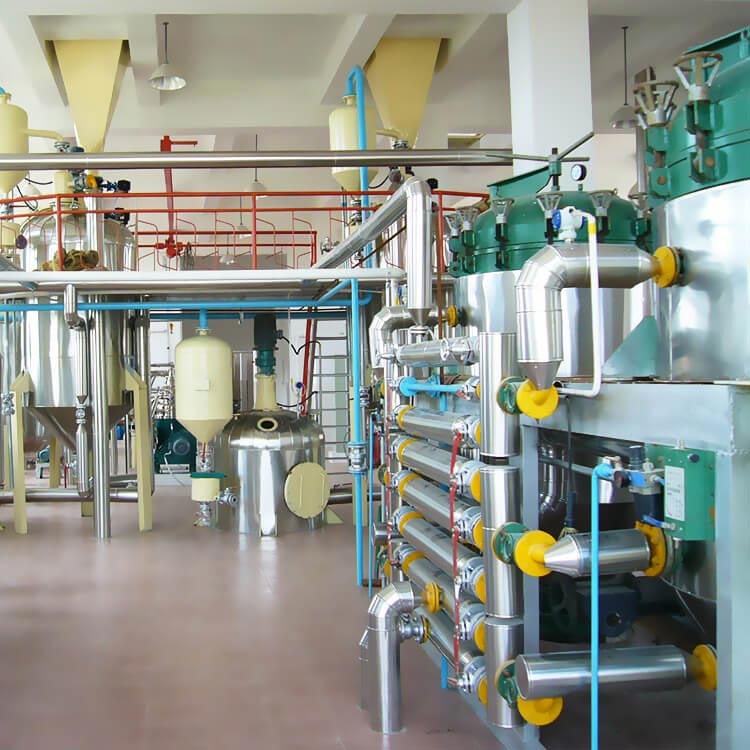
A first-time buyer nearly always arrives with a machine already in mind: a press seen on video, a figure carried in the head. That order of thinking is backwards, and reversing it costs nothing while the works is a sketch.
Five decisions shape a small edible oil mill long before anyone argues about steel. Settle them and the equipment list writes itself. Get one wrong and no machine rescues the project.
Decision 1: raw material decides oil and route
Oil content sets the ceiling: a seed carrying a generous fraction behaves one way under pressure, a leaner material another, and the cake leaving the machine holds value for whoever buys feed.
Palm arrives as a fruit with a soft pericarp around a hard nut; sunflower, sesame, rapeseed, cottonseed, groundnut and soybean arrive as seeds; rice bran arrives as a powdery residue from a neighbouring mill and starts losing quality within hours. Preparation differs for each, and it is where small projects quietly under-invest.
Supply rhythm settles size next. Groundnut and sunflower land in harvest windows, palm fruit flows most of the year where climate allows, and bran turns up daily from next door. A unit sized for the peak fortnight starves afterwards, and idle machinery still occupies floor.
Our edible oil mill solutions pages set out the route for each material from intake to filling.
Decision 2: capacity from demand, not from a price tag
Capacity is an output of your market, not of whatever a quotation looks like. Start from what you can genuinely sell monthly, then work backwards through trading days, shift hours, and the weeks material arrives.
Two temptations wreck it. One is buying whatever the number in front of you permits, which usually starves a larger plant. The other is comparing unit prices across quotations describing different scopes: the cleaner, the magnets, the elevators and the filter that one builder includes as standard are precisely the items another leaves you to discover missing during commissioning, which is why two numbers can agree while two plants differ.
Lines run from a handful of tonnes per day to integrated works handling thousands; the useful question is which band your demand occupies across a full year.
Decision 3: pressing or extraction, and where the threshold sits
Mechanical pressing squeezes oil out and leaves cake behind. Solvent recovers what pressure cannot release. The threshold is less a fixed tonnage than a judgement: is the oil still in that cake worth a solvent section, its safety systems, its permitting, and the trained crew it demands?
At modest throughput the answer is usually no. A screw press does the work, cake sells locally as feed, and the plant stays simple enough for one careful operator. Above that band, a pre-press feeding a solvent stage becomes conventional.
That preparation is what our seed pretreatment equipment covers: cleaning, dehulling or flaking, cooking and conditioning ahead of the press, the part of the line that decides how well the press performs.

Solvent work brings obligations: sealed machinery, ventilation, detection, exhaust recovery, and crews trained to a standard rather than merely briefed. Insurers and inspectors take an interest, and a young company without a maintenance habit should think twice before adopting all of that in year one.
Decision 4: edible oil refining now, later or never
Whether an edible oil refining section belongs in your first build depends on what your neighbours will actually buy.
Filtered, unrefined oil sells well where flavour and aroma are prized: mustard, sesame, groundnut in plenty of regions. Those bottles carry colour, smell and acidity a supermarket would reject, and a customer raised on that taste wants them that way.
Where your buyer is a bakery, a snack maker or a retail chain, they specify colour, acidity, odour and shelf stability, and unrefined edible oil fails those checks.
Three answers exist: build the stage now; reserve the floor area, steam and water capacity and pipework stubs, then add it when volume justifies the move; or have a third party refine on toll while you learn the pressing side. Our edible oil refining equipment section shows what that stage contains.
Decision 5: site, power and people
Power is the first site question. A press drawing heavy current behind a weak rural feeder will trip, and a tripping mill loses a shift. Ask what the transformer carries, what voltage does at peak, and whether standby generation belongs in the plan.
Water and steam follow: boiler duty, condensate return, cooling, and drainage for wash-down, all settled before the slab is poured.
Then the building itself. Oil mist settles on surfaces, seed dust hangs about, and both make floors slick and lungs unhappy, so ventilation and housekeeping are safety matters rather than tidiness ones. Trucks need room to turn, and covered storage for material and cake is not optional.
People settle the rest. A small mill needs one operator who reads the press properly, a mechanic who can weld and set bearings, and somebody measuring moisture and acidity instead of guessing.
Planning a small edible oil mill and want a second read on the route? Send us your material, target throughput and what your local market buys. We will mark up what we would alter and say why. +86 18337263319. No charge for the advice. Chat with us WhatsApp →
Mistakes first-time buyers make
Ordering machinery before supply is secured is the classic error. Equipment bought ahead of an agreement with growers stands idle while contracts get negotiated.
Under-specifying cleaning comes next. Screens, aspirators and magnets are the least glamorous items on any quotation and the best wear protection you can buy, since sand and stone destroy rolls and blind filters quickly.
Forgetting the cake buyer is common. Meal carries real value, and a plant with no outlet for it ends up storing material nobody wants.
Skipping measurement is worse than it sounds. Facilities with no testing habit discover a quality problem when a customer complains, which is the worst moment to learn it.
Overbuilding the first line is the final trap. A modest unit running daily teaches your crew the trade; an ambitious one half-fed teaches nothing and ties up space.
FAQ
What size should my first edible oil mill be?
Start narrower than ambition suggests and grow sideways: an extra cleaner here, a second expeller there. Expansion within one shed reuses the weighbridge and the fence; a second building repeats every utility decision.
Do I need a solvent extraction section at small capacity?
Rarely at the start. Watch the cake: when a feed buyer pays for protein while unsold oil stays trapped inside it, the case for a solvent bay starts arguing on your behalf.
Can I add edible oil refining later?
Yes. Leave the bay empty but serviced: floor loading rated for tanks, a pipework stub through the wall, panel space on the switchboard. Retrofit misery lives in foundations and drainage, both decided before concrete is poured.
Which oilseed suits a first project best?
Whichever crop your district already trades. A mill fed by an existing flow of lorries learns its quirks immediately; one waiting for farmers to change habits waits a very long time. Chat with us on WhatsApp, or call +86 18337263319.
Can one small line process more than one oilseed?
Frequently, though screens, cooking temperatures and press settings need resetting between runs, and changeover eats production nobody recovers. Keep the second material similar in behaviour and the compromise stays tolerable.