
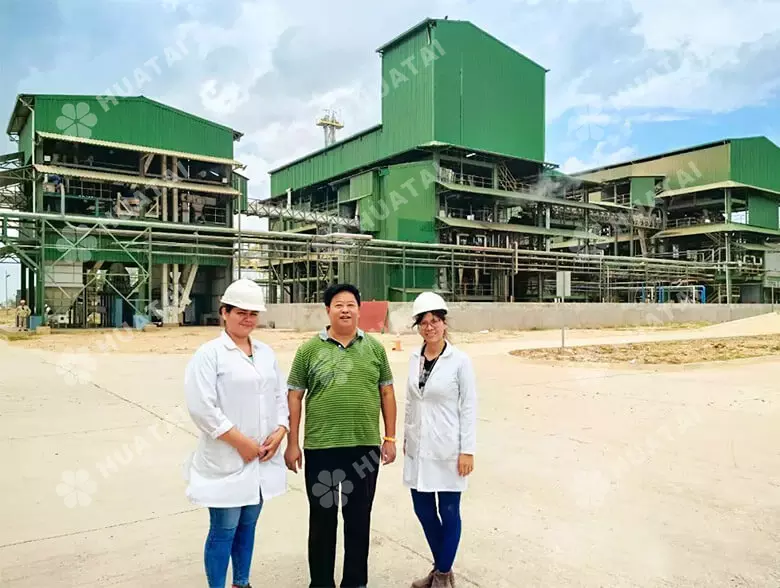
Some customer relationships open with a signing ceremony. Most do not. They begin with one machine that behaves itself, year after year, until somebody on the buyer's side says it out loud.
So runs the Inolsa story. A single soybean oil refining line in 2011. A complete soybean mill twelve years later.
2011: one line, and nothing to complain about
The opening order was unassuming: a 100 TPD soybean oil refining line. Degumming, neutralising, bleaching, deodorising. The four-stage sequence every edible oil refiner knows by heart.
What made it stick was the quiet. A train that runs without a backlog of stoppage calls does more for a supplier's standing than any brochure, because plant managers talk to each other, and they discuss downtime.
When Inolsa began weighing an expansion, the conversation was already open. Not through a tender, but a decade of unremarkable reliability.
Why the second order was the entire works
The 2021 decision was never "buy more of the same". Inolsa moved from finishing alone to pretreatment, solvent extraction and edible oil refining in one chain.
That shift moves risk. A refiner buying unrefined soybean oil elsewhere can point upstream when quality drifts. A site that crushes its own bean owns the whole path: seed condition, flake quality, meal specification, and what leaves the gate.
For a buyer this is a different species of purchase. It needs process design, not a product list.
A 1,500 TPD factory is not a bigger 100 TPD works
Doubling tonnage sounds like doubling steel. It does not work that way.
At small scale a solvent unit tolerates losses indefensible later. At 1,500 TPD every fraction of a point escaping becomes a weekly line item; recovery stops being an accessory and becomes the heart of the design.
Steam behaves the same way. On a compact train the boiler follows the process; on a large one the steam balance governs where vessels sit and whether heat recovery justifies the pipework.
So this extraction section was laid out around recovery capacity first, everything else sized to match. Get recovery right and the rest has room to breathe.
Pretreatment: the settings that decide what extraction can do
Pretreatment is where a soybean facility silently wins or loses. The sequence is familiar: cleaning, de-stoning, cracking, conditioning, flaking, expanding.
Judgement rests on two numbers, bean moisture and flake thickness. Neither is a catalogue value; both are set to whatever the downstream extractor needs, which depends on the seed, ambient conditions, and the soymeal specification the owner sells into.
Flakes too thick hold oil the solvent cannot reach inside the residence time available. Flakes too thin, or conditioned too hard, throw fines that blind the bed.
Solvent extraction: recovery first, tonnage second
This assembly carries a full desolventising-toasting section, DTDC in project shorthand.
That unit does two jobs. It strips solvent from meal, then cooks that meal to feed-trade specification. Both matter, and they pull against each other. Too little toasting leaves anti-nutritional factors. Too much damages protein: the meal still looks right, still ships, quietly commands less. Nobody notices until contracts return.
Urease activity and protein dispersibility index are the measurements that catch it. Ask how DTDC residence time is set, and what the supplier does when bean quality shifts.
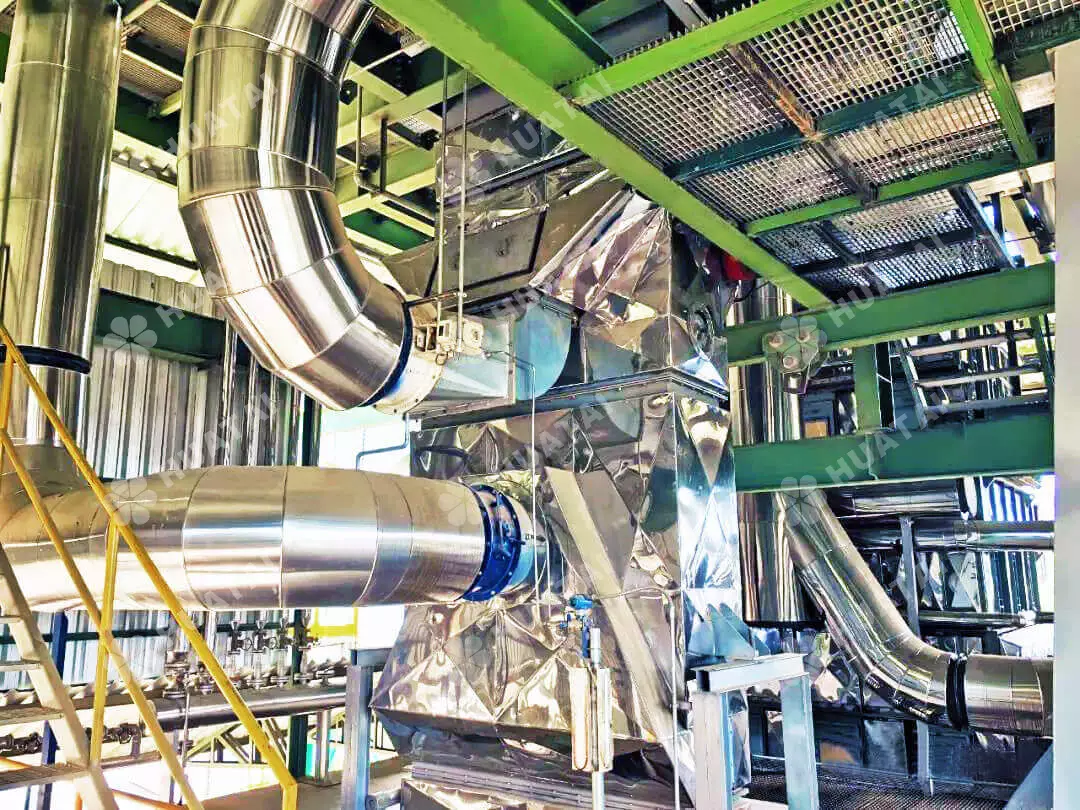
Edible oil refining and lecithin: three products from one bean
Downstream runs degumming, neutralising, bleaching, deodorising. Well-worn sequence.
The interesting part sits alongside. Soybean is one of the few oilseeds where gum pulled out during degumming is itself saleable. Lecithin.
That converts a waste stream into a second revenue line, provided the degumming step is designed for it from the start. Retrofitting lecithin recovery onto a works built to discard gums is possible, and rarely pleasant.
This specification named three outputs: refined soybean oil, meal, lecithin. Three products means three quality regimes, three storage arrangements: a far broader brief than "make oil".
Commissioning: what the first months actually test
Commissioning a plant this size is not a switch-on. A sequence of proofs.
Water trials precede product. Motors run unloaded before loaded. Instrument loops get checked against a simulated signal before anyone trusts a reading. Only then does bean enter.
What gets underestimated: people. A 1,500 TPD works runs on a skeleton crew and one console. Operators trained on a smaller train must unlearn walking over to a machine to see what it is doing. That transition outlasts the mechanical work, so training belongs in the schedule, not an after-sales binder.
What the visit confirmed
In October 2023 Huatai's chairman travelled to Bolivia with the company's South American market manager. The plant was operating. The account was terse: the equipment does what the contract said, and the installation has become a reference neighbouring countries come to inspect.
One photograph from that trip says more than any specification sheet. The Chinese flag on top of the silo, raised by the customer.
Contemplating a project at this scale? The 1,500 TPD soybean plant in Bolivia data sheet shows a full-line scope. Our soybean oil production line page covers smaller configurations, and the solvent extraction equipment section lists the machinery between them.
Send your bean assay, the capacity band you envisage, and the meal specification your market accepts. We will answer with a process flow and the questions we ask first. Chat with us on WhatsApp, or call +86 18337263319. No charge for the first read.
FAQ
What changes for a refiner that adds crushing and extraction?
Ownership of the whole quality chain. Buying unrefined soybean oil leaves raw material quality in someone else's hands. Crushing your own bean puts it in yours, and hands you meal specification too: a second product with its own rules and buyers.
What is the hardest part of scaling from 100 TPD to 1,500 TPD?
Not the machines. The relationships between them. Solvent recovery, steam balance and meal quality stop being secondary and start driving layout. Scale up drawings instead of reworking the design and you get a works that runs, and runs expensively.
Does a soybean works need a DTDC?
If meal is part of the business, yes. The desolventiser-toaster strips solvent and sets protein quality, which decides what meal is worth. Without command of residence time and temperature it leaves the gate looking acceptable and testing poorly.
Can lecithin recovery be added later?
It can, but designing it in costs far less. Lecithin needs the gum stream kept separate and at the right concentration from day one. Retrofitting means reworking pipework and finding floor space nobody allocated.
How is commissioning handled at this scale?
As a phase with its own schedule, not a handover event. Water trials, loop checks, first material, steady running and operator training overlap, and training usually outlasts the mechanical work. Treat it as a formality and you get a site technically complete, practically unfinished. Chat with us on WhatsApp, or call +86 18337263319.