
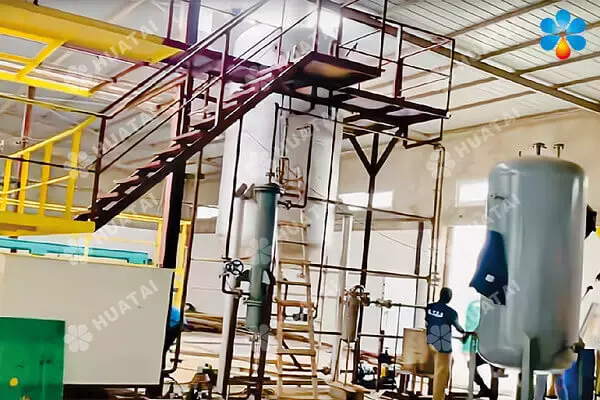
A groundnut processor in Senegal came to us with a crop they knew well and a headache they knew better. Harvest lands in a rush, and whatever happens in the weeks afterwards decides whether the oil sells. SOCIETE DE TRANSFORMATION DARACHIDE RAFFINEE-INDUSTRIES SUARL wanted kit that could take seed in from nearby collection points and ship bottled cooking oil out, without waiting on somebody else's shelling timetable. We supplied a 30 ton per day groundnut shelling, pressing and edible oil refining line on a turnkey basis. Here is how we put it together, and what start-up really looked like.
Why shelling had to sit at the front
Most enquiries we field begin at the press. Natural enough, since that machine is what buyers picture. Also where thinking usually goes wrong. Groundnut's weak point isn't squeezing, it's storage.
Damp pods go mouldy. Mould yields aflatoxin. At a frontier, aflatoxin isn't bargained down a grade, it gets a container turned away. Downstream treatment doesn't reliably strip it either, so prevention stays the only dependable control: dry promptly, keep dry, pull damaged kernels. Miss one of those three and nothing further along will rescue the lot.
Shelling on site, at the head of the layout, shifts the timetable. Kernels move into drying, then into processing, on a schedule the facility owns rather than one set by how long local trading takes. That single choice shaped the floor plan more than any equipment decision did.
Three questions we settle before anything gets drawn
How many months a year will you actually run? Groundnut is seasonal. Kit fed only while crop arrives behaves very differently from kit fed out of storage across most of a year, and that answer decides whether a solvent stage belongs in the budget.
What do buyers nearby pay for the meal? Groundnut cake sells well as feed across much of West Africa. What it fetches governs how much product you can sensibly leave behind.
Which grade are you chasing? Bottled cooking oil for a home market needs a complete polish train. Bulk oil bound for a regional blender may need far less.
We raise those in every conversation, before quoting. Cheap up front, brutally expensive as afterthoughts.
Walking the process
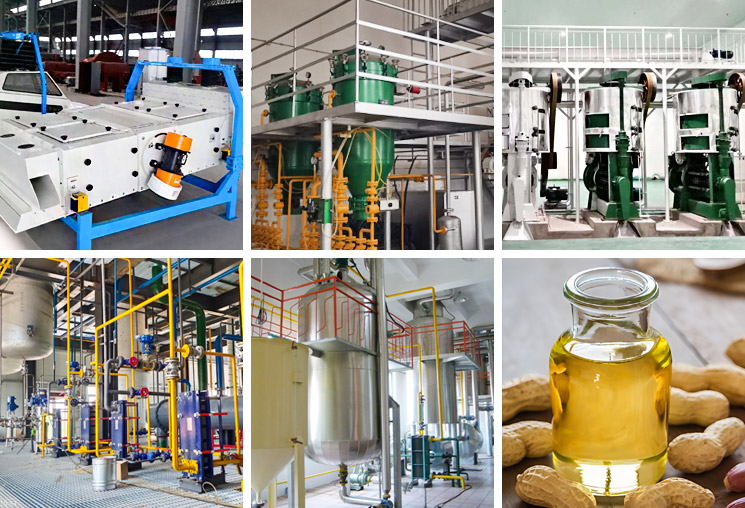
Cleaning leads: destoning, shelling, kernel separation, sorting. Sorting earns its place here. Discoloured and damaged kernels carry the mould load, and lifting them out before a cooker sees them beats coping with what they do to colour and flavour later.
Preparation follows. Kernels get cracked, rolled, conditioned. Crews arriving from soybean or rapeseed need warning. Groundnut holds plenty of oil and little fibre, and travels from underdone to scorched inside a narrow band. Cooking becomes a shorter, sharper job than they expect, and the window shuts fast. Much we specify in a seed preparation line exists to hold that window steady.
Presses take out the bulk, leaving cake holding a modest share. Whether that share is tolerable returns straight to the meal question above.
From there the product enters degumming, neutralizing, bleaching and deodorizing, bringing it up to edible specification. Our edible oil refining equipment covers that train, and sizing it alongside everything else beats bolting it on once the building is finished.
Pressing alone, or pressing plus solvent
This fork decides a groundnut plant's shape more than any other, so it deserves plain speaking.
Squeezing alone leaves a useful amount of product behind in the meal. Adding a solvent stage recovers most of what remains. It also brings solvent handling, safety systems, trained supervision, and capital that has to justify itself twelve months a year.
Storage permitting long running months can make that arithmetic work. A brief crop season leaves the same hardware idle, and the case weakens badly. Work out your real operating months first. Once concrete is poured, it stops being a question. Our groundnut oil plant page walks through the comparison in more detail.
What the site asked of us
Delivery is unglamorous, and it is where schedules slip. Foundations plus anchor positions need agreeing before containers land, not after. Power must match installed load with the polish train counted in, since heat is load. Water for conditioning and cooling needs a route to a drain. Steam, whether from a boiler or thermal oil unit, needs a home with clearance around it.
None exotic. All easier to settle on drawings than on a finished floor with a container waiting outside.
Start-up, in the order we run it
We never fire a plant at the press. We begin at discharge and work backwards, one stage at a time.
Cleaning and shelling run first on partial load, so sorting and separation get tuned before anything downstream demands material. Preparation follows, with cooking set against seed actually on the floor instead of a laboratory figure. Presses come next, trimmed for cake thickness and feed rate. Only then does the polish train go live.
Working that way means a fault surfaces inside the stage that caused it, rather than three steps later wearing somebody else's clothes. What turns up first is almost always ordinary: a conveyor tracking off, a level probe reading wrong, a steam trap that never opened, a motor spinning backwards. Dry runs plus water trials catch most of it before a single seed goes in.
Training runs alongside, never after. Operators who have watched their own machines start cold, trip, and restart under supervision are worth more than any manual we hand over. They are why a line keeps turning long after our engineers fly home.
What we'd tell a buyer planning something similar
Fix operating months before choosing a process route. Seasonality moves the extraction decision harder than capacity does.
Treat storage as part of the facility. It remains your only dependable aflatoxin control.
Size refining with the layout, not after it.
Start up backwards from discharge. Faults stay where they belong.
Train during commissioning. Handover day comes too late.
FAQ
Why shell inside the oil line rather than buy kernels ready shelled?
Because storage creates aflatoxin risk. Shelling on site lets kernels reach drying, then processing, on a timetable the facility controls instead of idling in bags.
Does a plant this size need solvent extraction?
Depends on running months and meal value. A short season with strong cake prices favours squeezing alone. Long running months backed by decent storage make the addition far easier to justify.
What does commissioning cover on a turnkey job?
Dry runs, water trials, stage by stage start-up from discharge backwards, operator training running alongside, and handover with spares plus documentation.
CTA
Planning a groundnut plant, or weighing pressing against solvent for a seasonal crop? Tell us your tonnage, how many months a year you expect to run, and the grade you intend to sell. We'll say plainly which configuration fits. +86 18337263319. No charge for the read. Chat with us on WhatsApp →